Developing Community Capacity-Building Systems for Effective and Sustainable Disaster Response
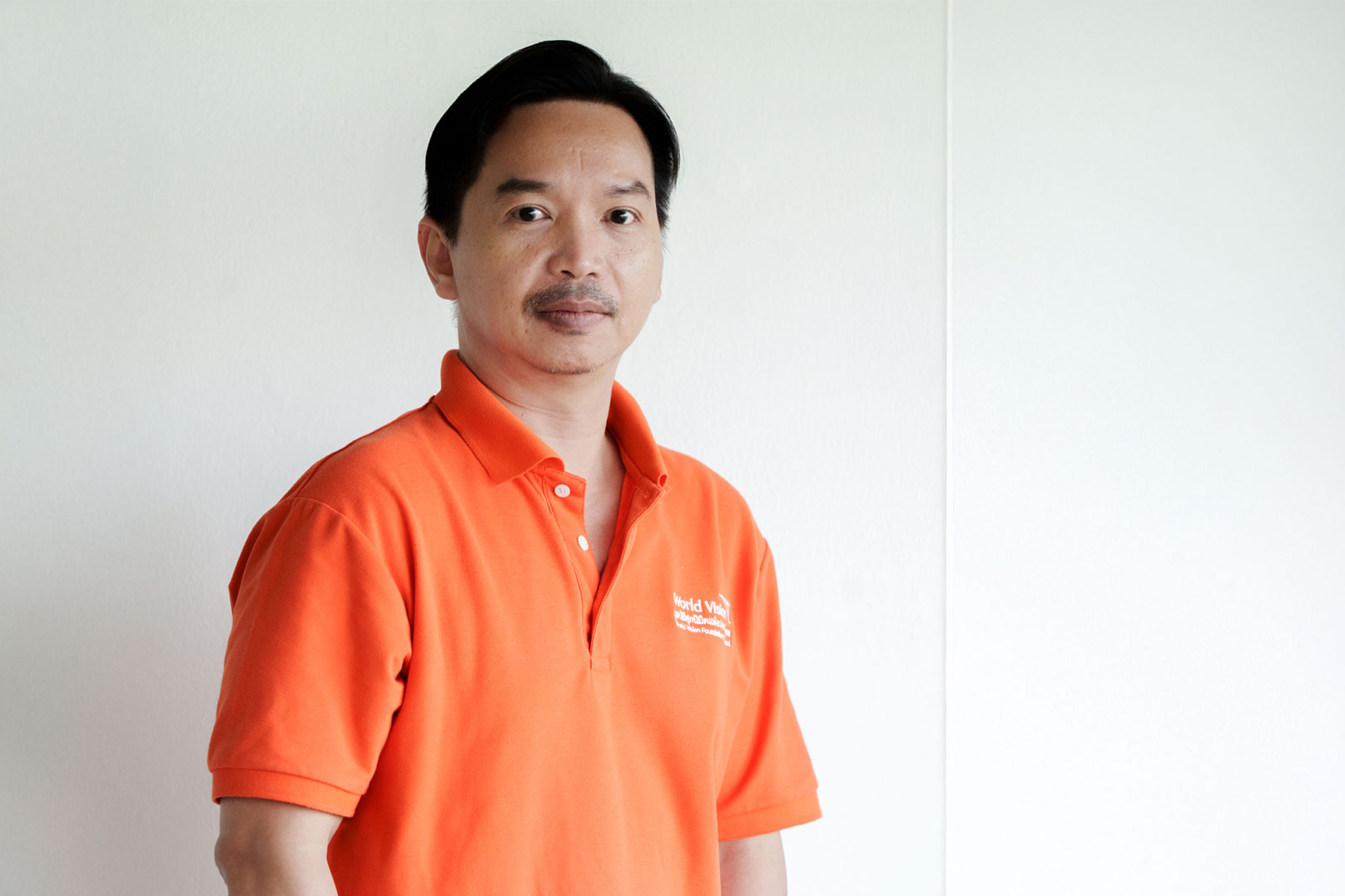
Disaster management in Thailand requires both systematic knowledge and a deep understanding of local contexts. Over the years I have worked in this field, I have learned that effective disaster response is not just about emergency relief, but also empowering communities to recover and sustain themselves over time.
Although I was born in Bangkok, my family’s hometown is in Phak Hai District, Phra Nakhon Si Ayutthaya Province, an area located along the river and highly prone to flooding. Growing up in a traditional elevated wooden house and travelling by boat in my childhood gave me an early understanding of how to adapt to disasters.
My educational journey began at Panabhandhu School, followed by Samsenwittayalai School and Wat Saket School, before I graduated with a bachelor’s degree in Political Science from Ramkhamhaeng University. This academic foundation has been crucial in my work in social development and policy-based management.
I began my career in community development through World Vision Foundation of Thailand’s Area Development Programme (ADP) in Bangkok. The major flood in 2011 marked a turning point, leading me to fully commit to disaster response work. Being on the ground to assist disaster-affected people, especially vulnerable groups, made me realise the urgent need for effective and sustainable community support systems.
Although I initially lacked direct experience in disaster management, I underwent basic fire safety and first aid training, which sparked my learning in safety and emergency preparedness. This knowledge later evolved into a more systematic understanding of disaster management when I joined World Vision Foundation of Thailand’s HEA team.
As a Humanitarian & Emergency Affairs (HEA) Specialist, I am responsible for collecting data and assessing disaster situations in various areas. I work through the DDG (Declaration Decision Group) mechanism, which involves a team that jointly decides whether a disaster event should be declared based on situation assessments using the CAT (Category Assessment Tool). This tool measures the severity of disasters in areas such as the number of affected individuals, damage to infrastructure, and access to aid.
The DDG places special emphasis on the impact on children and vulnerable groups, for example, children who have lost their homes, lack food or clean drinking water, or cannot access education. It also includes the elderly, people with disabilities, and impoverished families at high risk of long-term impacts. Prioritising these groups ensures that responses are swift, effective, and tailored to the specific needs of those affected.
To determine the category of the disaster and plan a systematic response, I work with the National Disaster Management Team (NDMT) to consider aid strategies and submit reports to the World Vision International’s disaster report system (WVRelief). I also collaborate with the Branding & Communications team to produce communication materials and fundraising resources.
World Vision Foundation of Thailand’s humanitarian aid prioritises child protection and restoring the lives of children and vulnerable groups, as they are the most affected and least able to recover in emergencies. Children are the future of communities. Ensuring they have access to food, clean water, healthcare, and continued education lays the foundation for long-term and sustainable recovery.
At the same time, vulnerable groups such as female-headed households, people with disabilities, or the elderly often face challenges in accessing general aids. Therefore, specific measures are needed, such as the provision of safe spaces, counselling, or psychosocial support. Designing aid that meets the unique needs of these groups is a hallmark of World Vision Foundation of Thailand’s ministry, which emphasises human dignity, equity, and sustainable recovery.
I have had the opportunity to participate in missions across various areas, including flood relief from Tropical Storm Yagi in the North, setting up a shelter in Chiang Rai, distributing relief supplies, repairing schools, and supporting funds to families. I have also responded to the recent earthquake in Thailand in March 2025 and the Thai–Cambodian border situation. More than 10,000 people have received direct assistance, and follow-ups show that 70–80% of families were able to return to normalcy within three months.
World Vision Foundation of Thailand places great importance on proactive preparedness, including risk assessments, disaster response planning, and resource preparation such as life-saving kits, school supplies, child protection materials, and ready-to-deploy shelters.
Working in emergencies requires close coordination with government agencies such as Sub-district Administrative Organisations, district offices, the Department of Disaster Prevention and Mitigation, and military or rescue units. Typically, World Vision Foundation of Thailand conducts a few disaster response training sessions yearly, with 50–100 participants each time, to enhance the understanding and skills of staff and volunteers.
I also prioritise ongoing collaboration with communities, such as forming volunteer teams and training them in basic disaster response skills. This enables communities to respond quickly and safely.
Every disaster presents a challenge, as we must always be prepared without knowing what will happen. Accessing affected areas can be difficult. For example, during severe floods, we may need to coordinate with government agencies for assistance to access affected areas due to our lack of suitable vehicles. Sometimes, field missions last longer than planned; we may prepare to work at a site for three days but end up staying for a week or more. Dealing with such situations requires high flexibility, contingency planning, and close collaboration with communities and agencies to ensure the most effective response.
Looking forward, I believe disaster response should focus on community empowerment by strengthening them to be able to assess risks, plan responses, and manage local resources effectively. Incorporating technology and spatial data, such as early warning systems and digital risk assessment tools, can also enhance decision making.
Effective disaster response is not just about providing emergency aid, but also building sustainable systems and empowering communities to recover independently. Field experience and close collaboration with communities are at the heart of developing an effective and sustainable disaster management system in Thailand.