“Teacher, can I draw a picture?”
This simple question from an ethnic Hmong student years ago marked the beginning of an unexpected journey.
What started as an effort to overcome communication barriers for children whose mother tongue is Hmong has evolved into a programme that has transformed a local school in the World Vision Foundation of Thailand’s Tap Tao Area Program in Chiang Rai Province into a vocational learning hub that tangibly connects education, local wisdom, and community economic development.
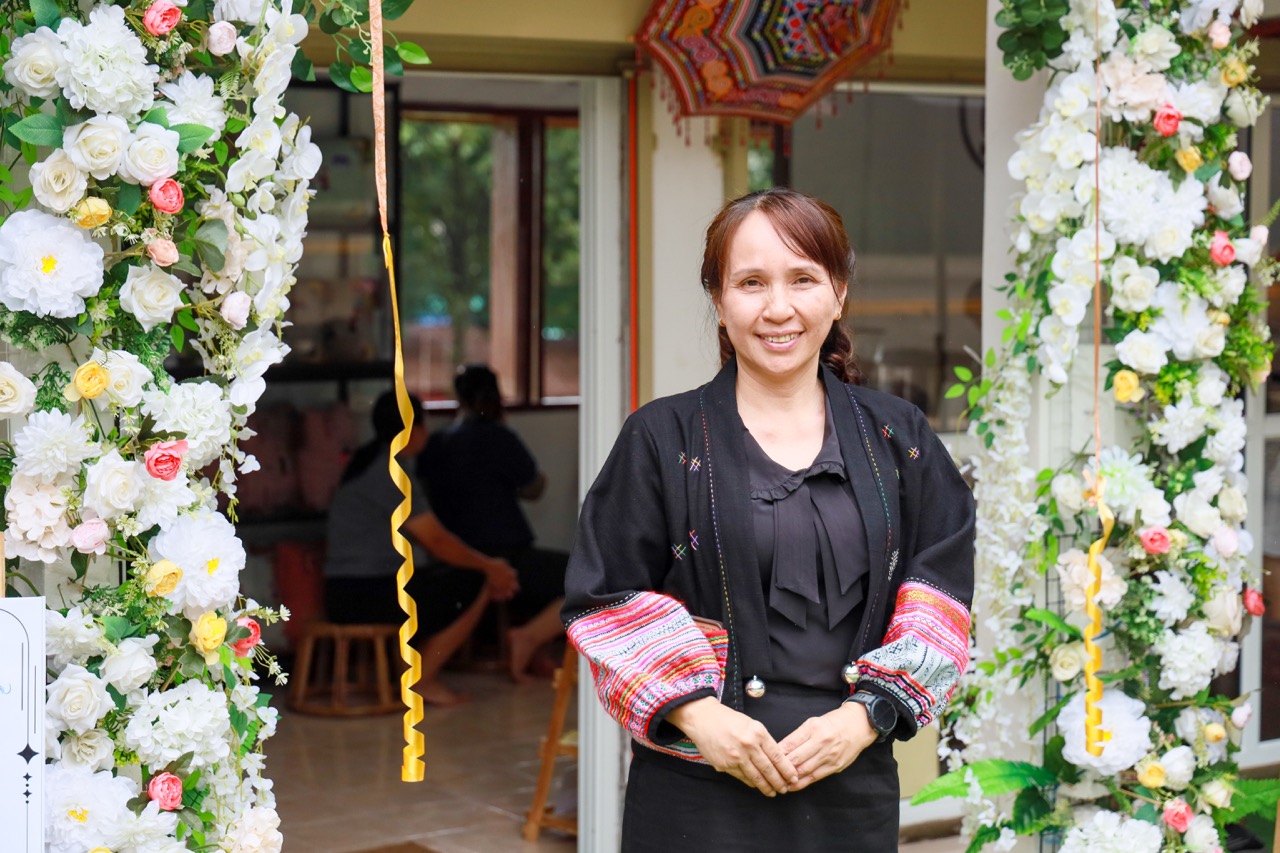
Mrs. Vijittra Phootiso, affectionately known as ‘Kru Pam,’ a social studies teacher who has served at the school for over 22 years, recalled the early challenges: most local children speak Hmong as their primary language and face limitations in Thai communication, which directly affected their classroom learning.
“The children struggled with communication because Hmong is their first language and Thai is their second, creating challenges during lessons. When I explained things, some students would ask, ‘Teacher, can I draw a picture?’ It all began with that simple moment,” she explained.
In response, the teacher adapted her teaching methods, utilizing drawing and booklet-making as tools to help students express their thoughts visually rather than relying solely on spoken words.
Through this process, she uncovered something far more valuable than simply helping children learn Thai.
“Our original goal was to address the children’s literacy difficulties, but along the way, we discovered a different kind of potential. While they might struggle with language, they possessed exceptional craftsmanship, attention to detail, and a hidden artistic talent,” she added.
When Hmong Heritage Became a New Learning Space
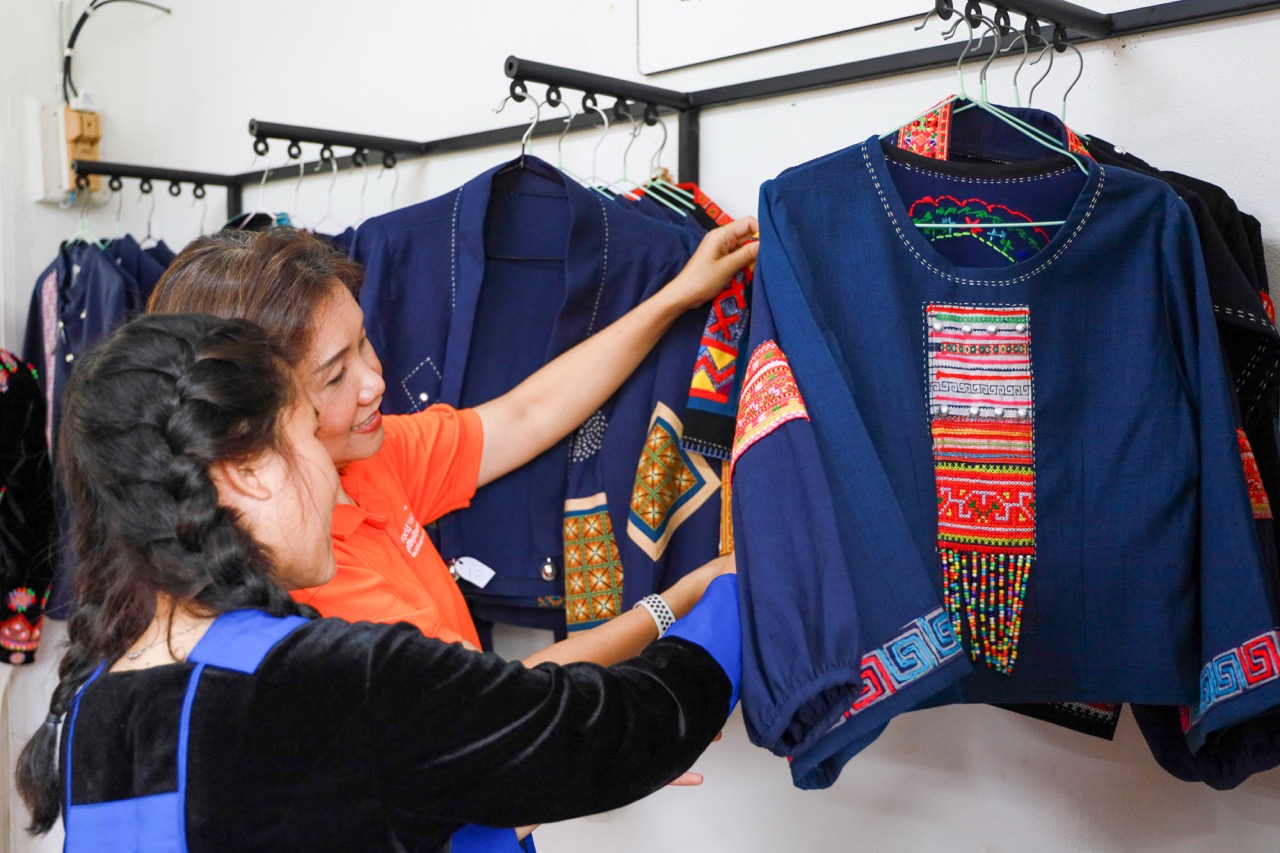
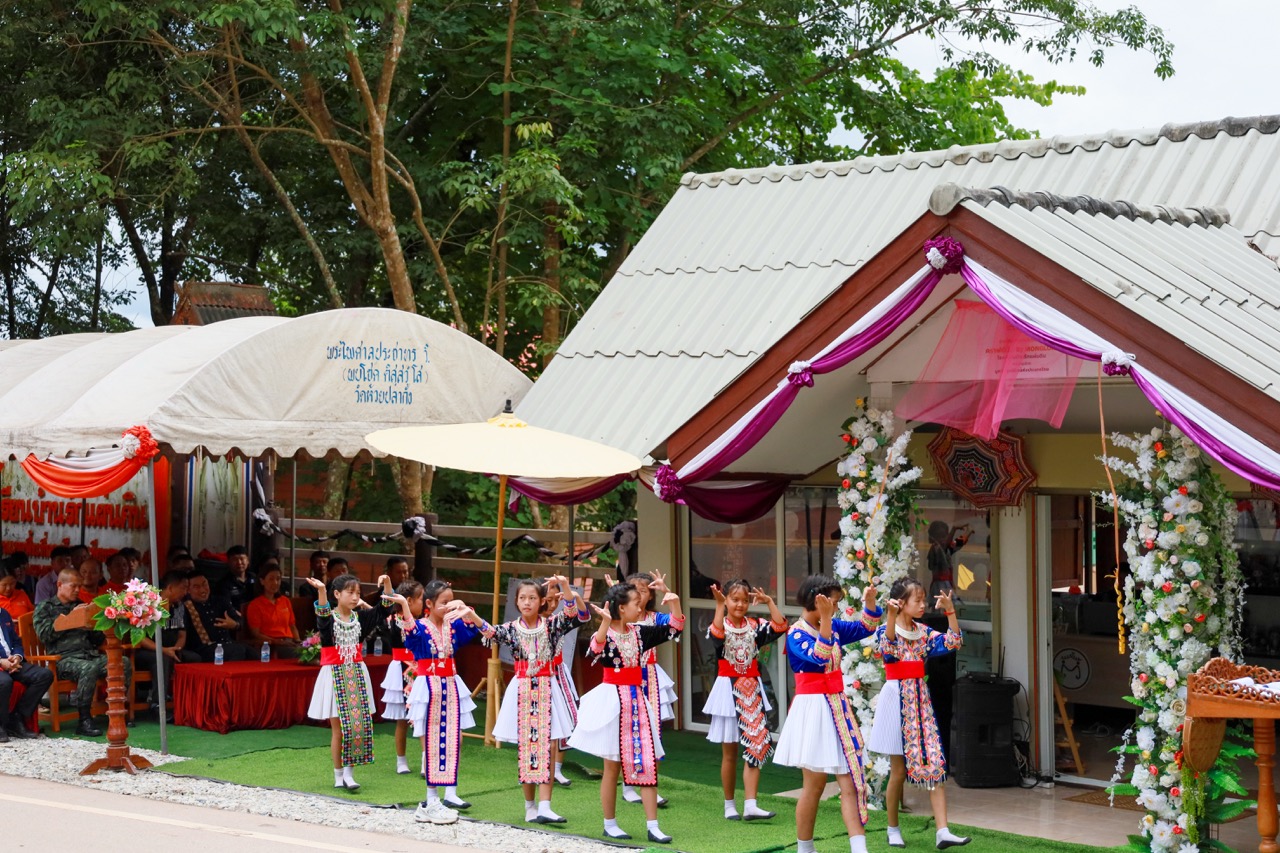
During the COVID-19 pandemic, the school reevaluated its community assets and recognized that traditional Hmong embroidery, passed down through generations, remained prevalent in nearly every household. Historically, however, this embroidery was used primarily for traditional Hmong attire and important ceremonies.
“We thought, ‘Why shouldn’t other people get to see, wear, and use such beautiful work?’ We wanted everyone to have access to and appreciate the value of Hmong embroidery,” she said.
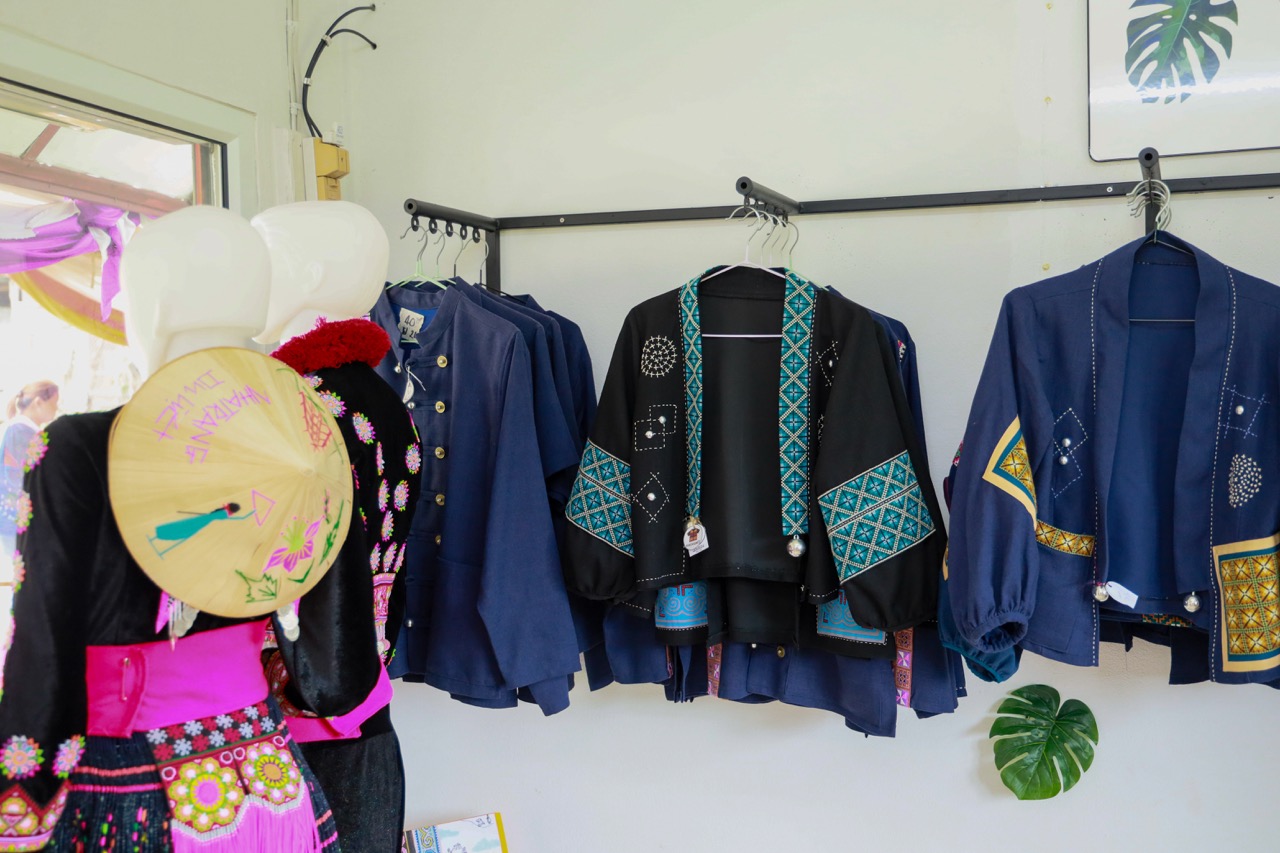
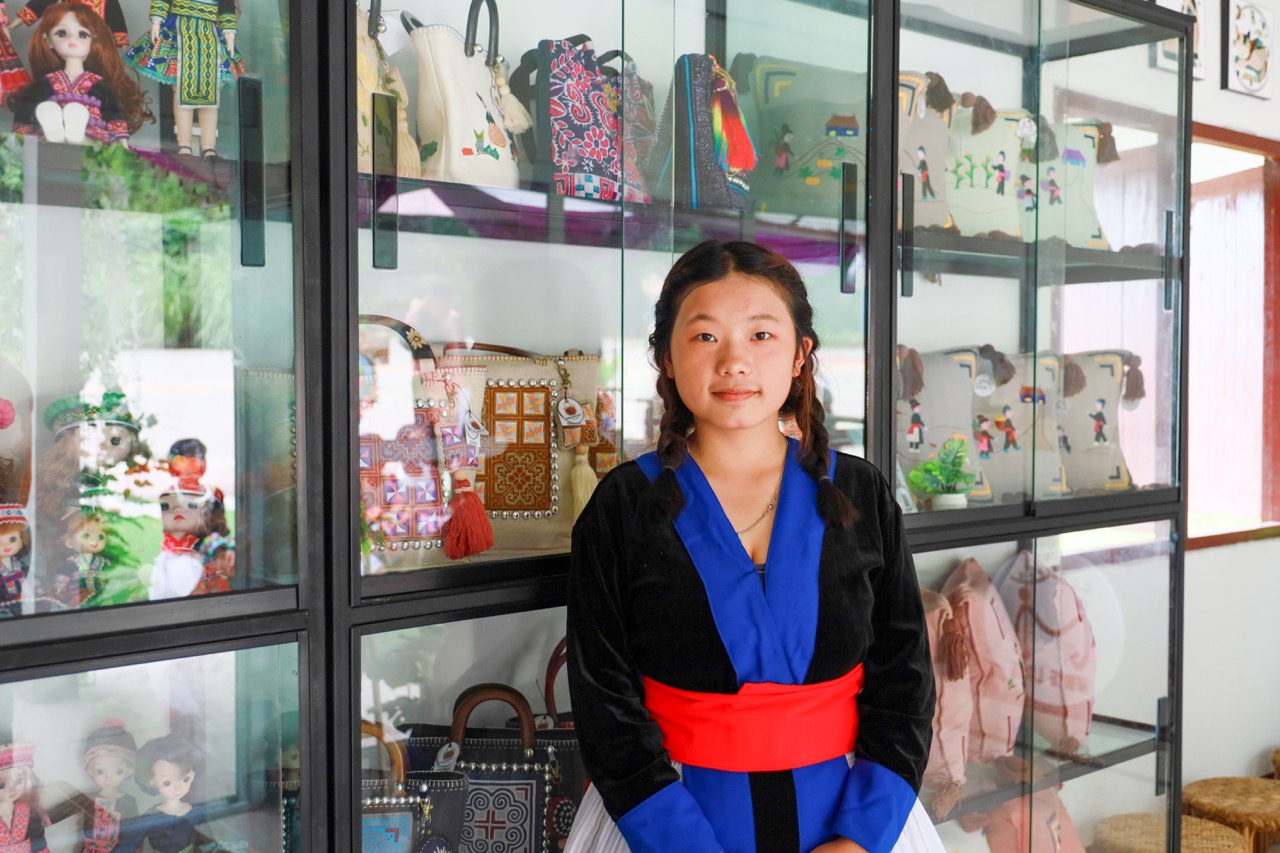
Students’ original drawings were subsequently merged with traditional embroidery and fabric-painting techniques to create prototype products reflecting local identity with a contemporary aesthetic. Starting with a few pillowcases, the initiative expanded to include tote bags, tissue box covers, handcrafted dolls, and various souvenirs, and the products have now been developed to meet OTOP standards in Chiang Rai Province.
From a development perspective, this initiative leverages cultural capital to generate economic value through product design, brand building, and value chain development that seamlessly integrates students, the school, and the local community.
“I Am Preserving My Own Culture”
Among the young people who have grown through this learning process is Orapin, or ‘Nong Pin,’ a ninth-grade student.
Nong Pin shared that as an ethnic Hmong, embroidery has been a natural part of her life since childhood, having learned the craft from her mother at home.
“We already knew how to embroider from our mothers. When we joined the project, our teachers helped us build on that foundation by teaching us modern design techniques,” Nong Pin noted.
For her, the program goes beyond product making; it instills responsibility, time management, and teamwork.
“Our teachers taught us to take responsibility for our craft and use our free time productively,” she shared.
Building on traditional embroidery skills once used within the community, Nong Pin and her peers now co-create modern lifestyle products that showcase their distinct Hmong identity.
Her greatest source of pride is not high sales figures, but the opportunity to share her cultural heritage with the outside world.
“I am so happy to help promote our culture and introduce it to more people. It brings me immense joy,” she said.
Nong Pin also views the design and sales skills gained from the project as essential foundations for her future career.
“We learned basic design principles and practiced real sales skills. If we want to start a business or sell products in the future, we can directly apply this knowledge,” she added.
From Producers to Young Entrepreneurs
A key strength of the initiative lies not only in handicraft production, but in providing students with comprehensive entrepreneurial experience. Students participate in every phase of the business cycle—from design and production to cost management, sales, public relations, and community coordination.
“Students are involved at every step—embroidering, sewing, designing products, and directly liaising with community members,” Kru Pam explained.
As customer orders grew, the school expanded production to families and the wider community, enabling parents skilled in embroidery to take on piecework at home and generate supplementary household income.
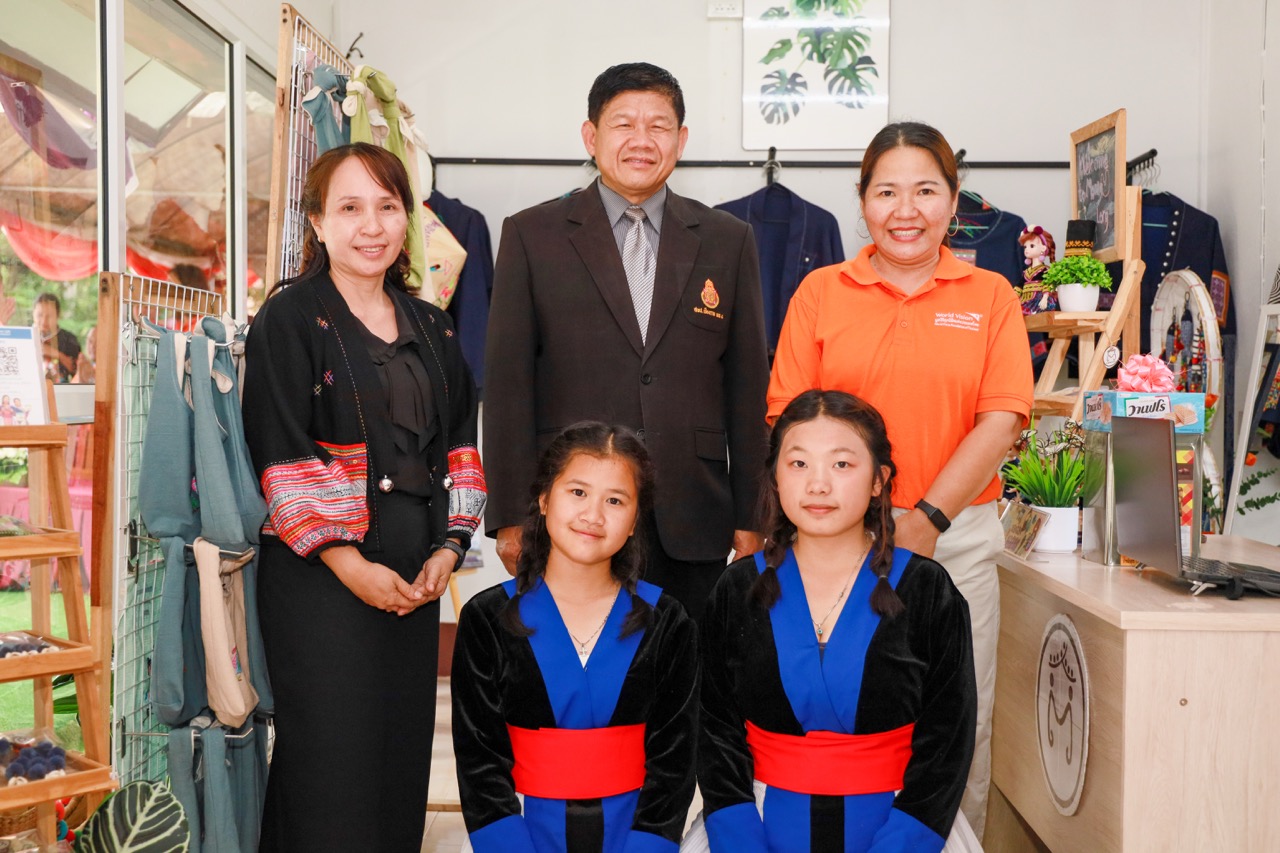
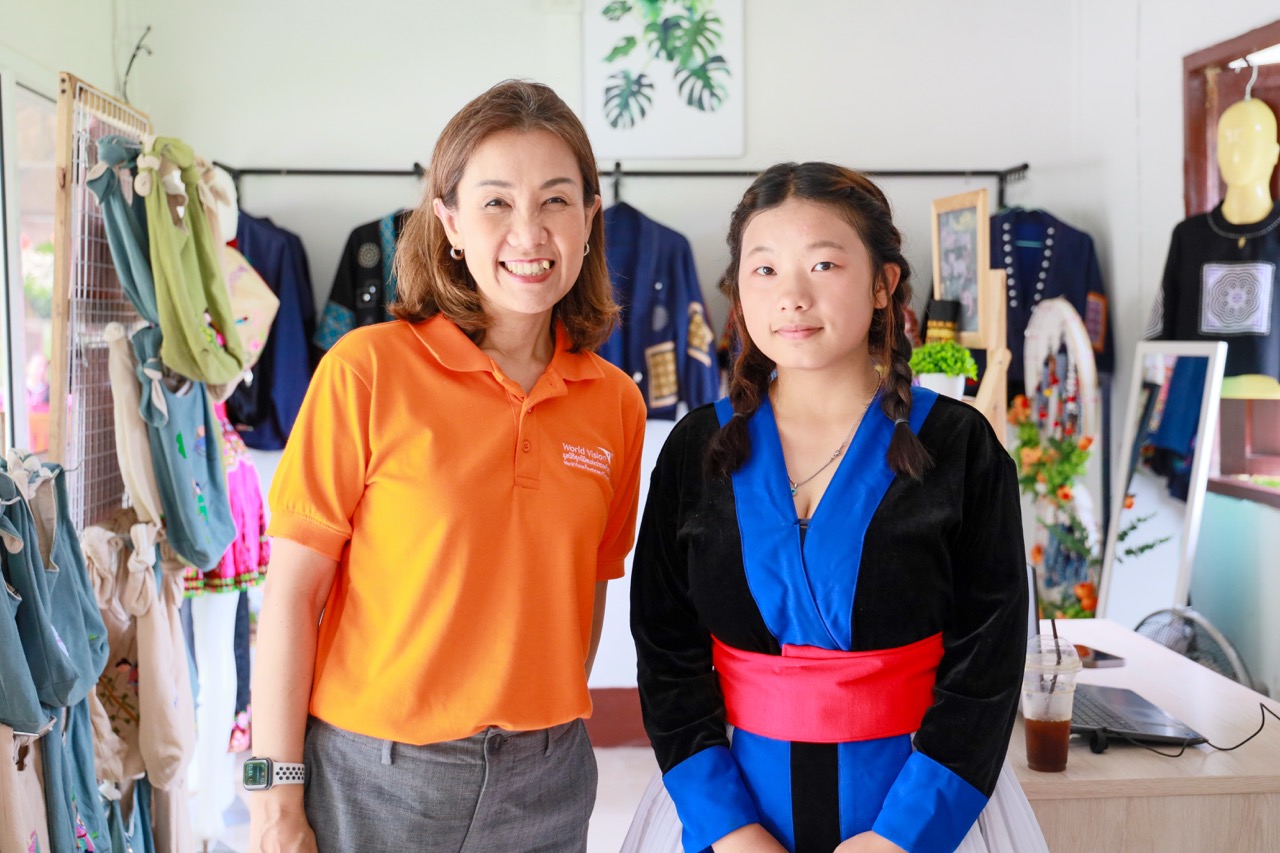
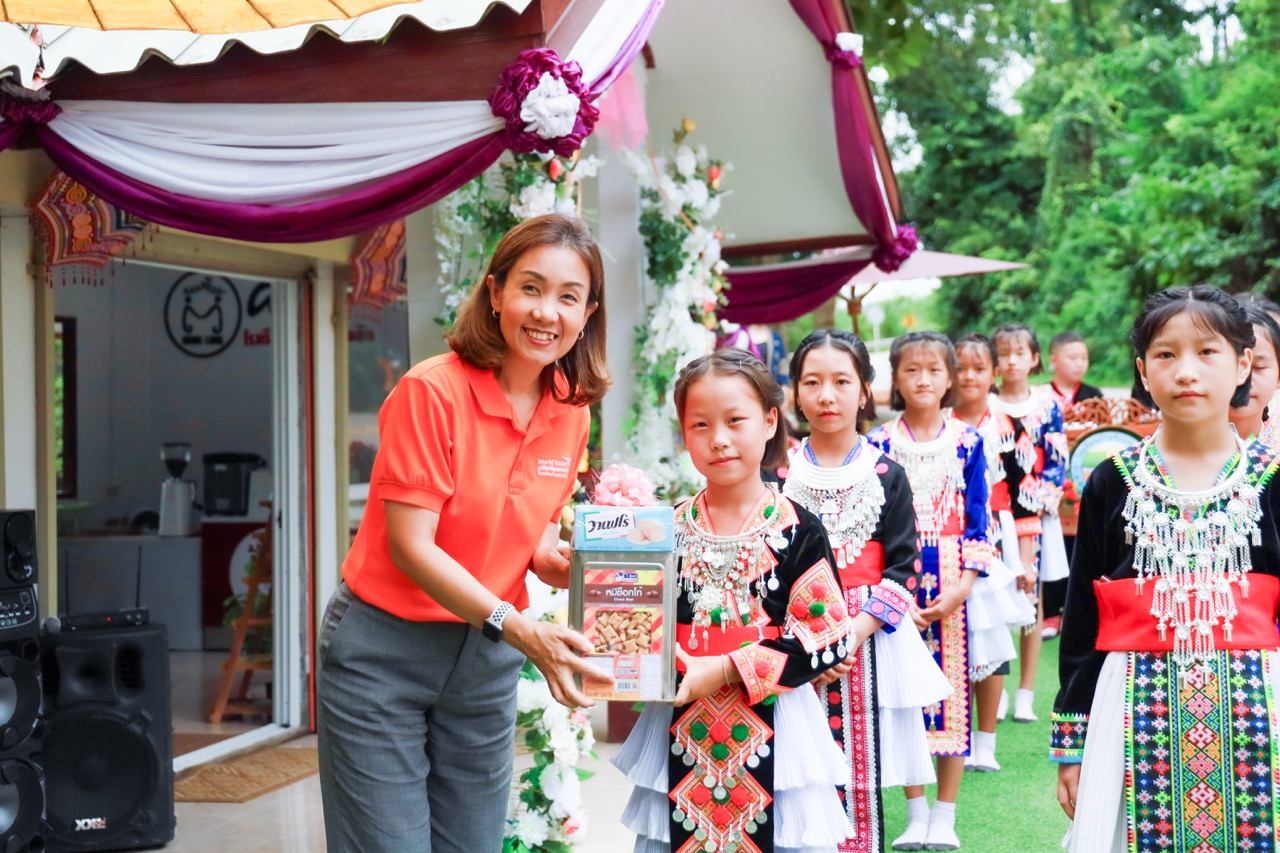
World Vision Foundation of Thailand plays a vital role in providing management support, helping improve production systems, arranging product display spaces, and fostering connections between the school and the community.
The result is a learning model that simultaneously builds skills, generates income, and fosters pride in cultural identity.
Sparking Dreams Through the School Coffee Shop
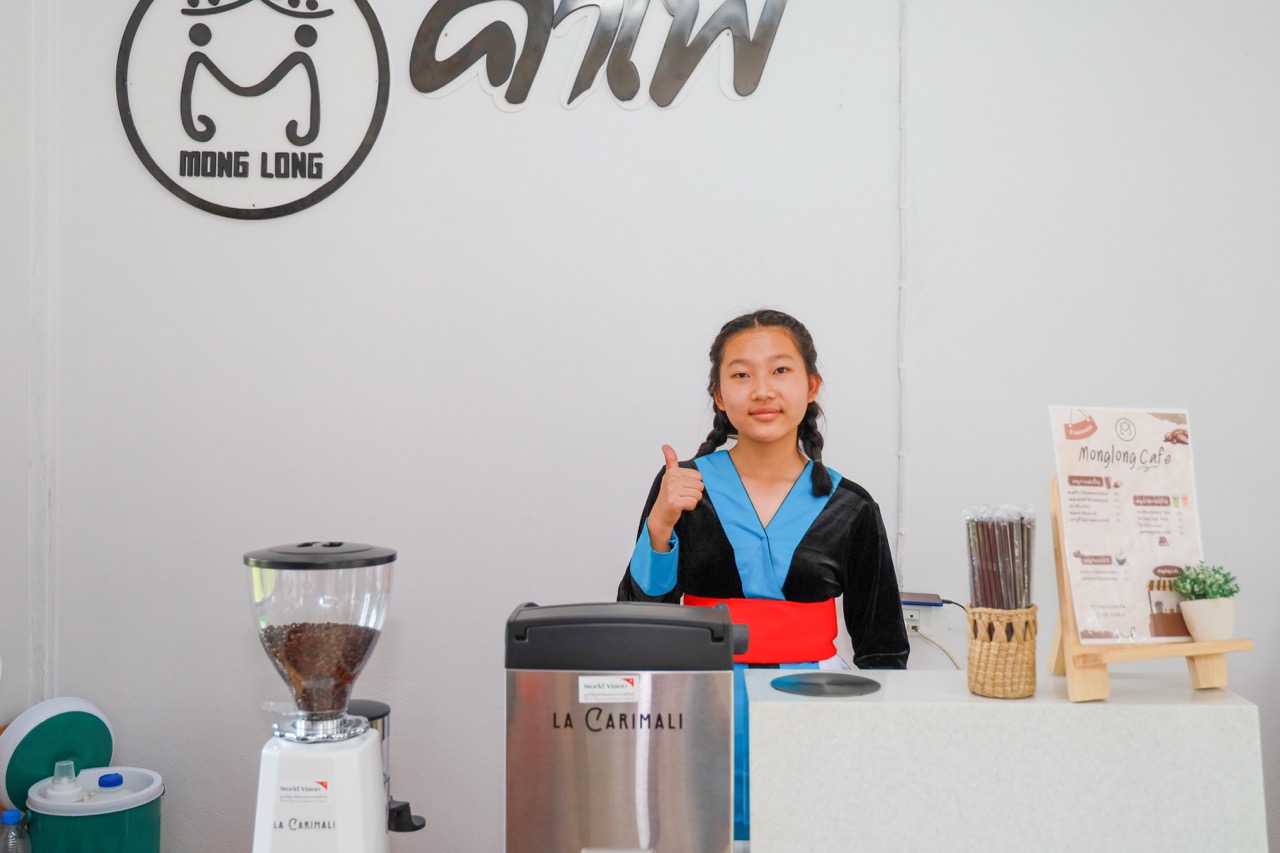
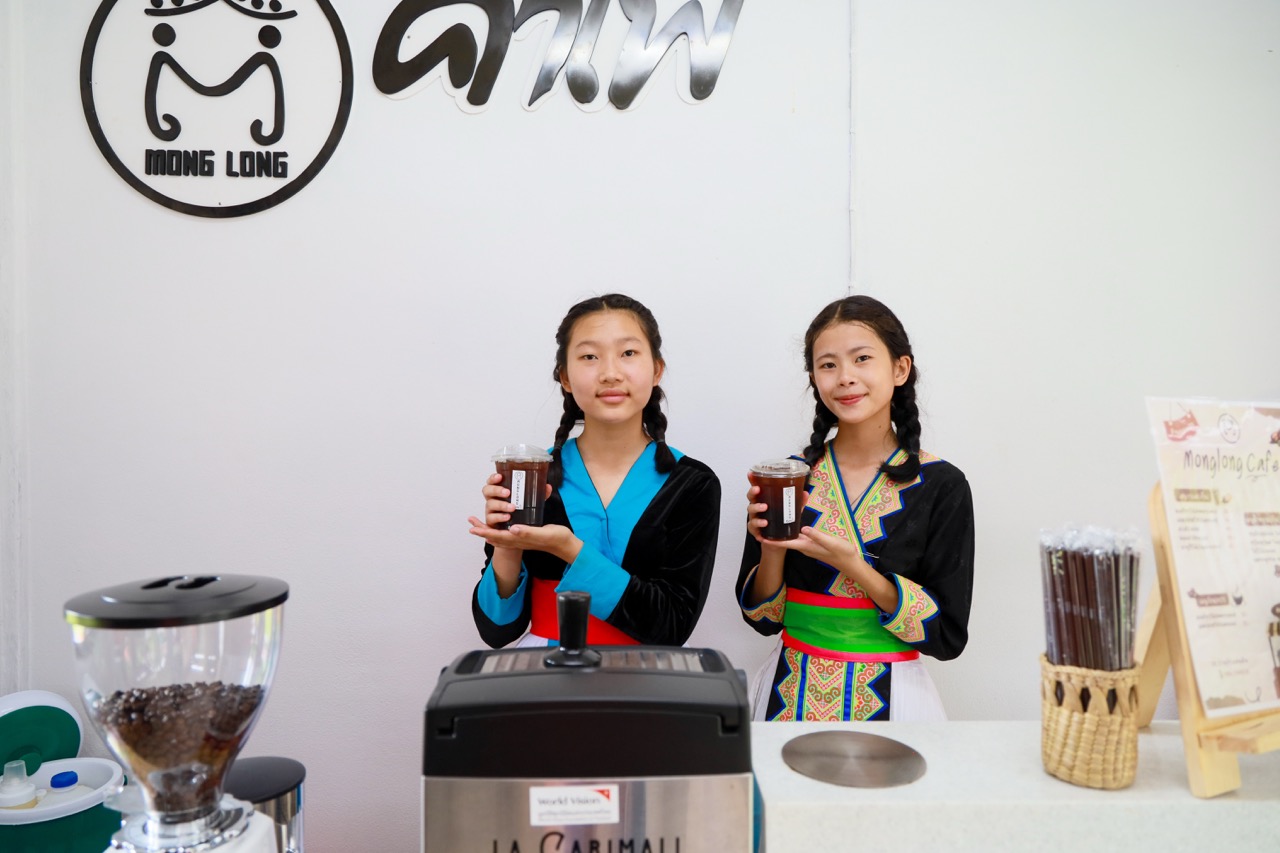
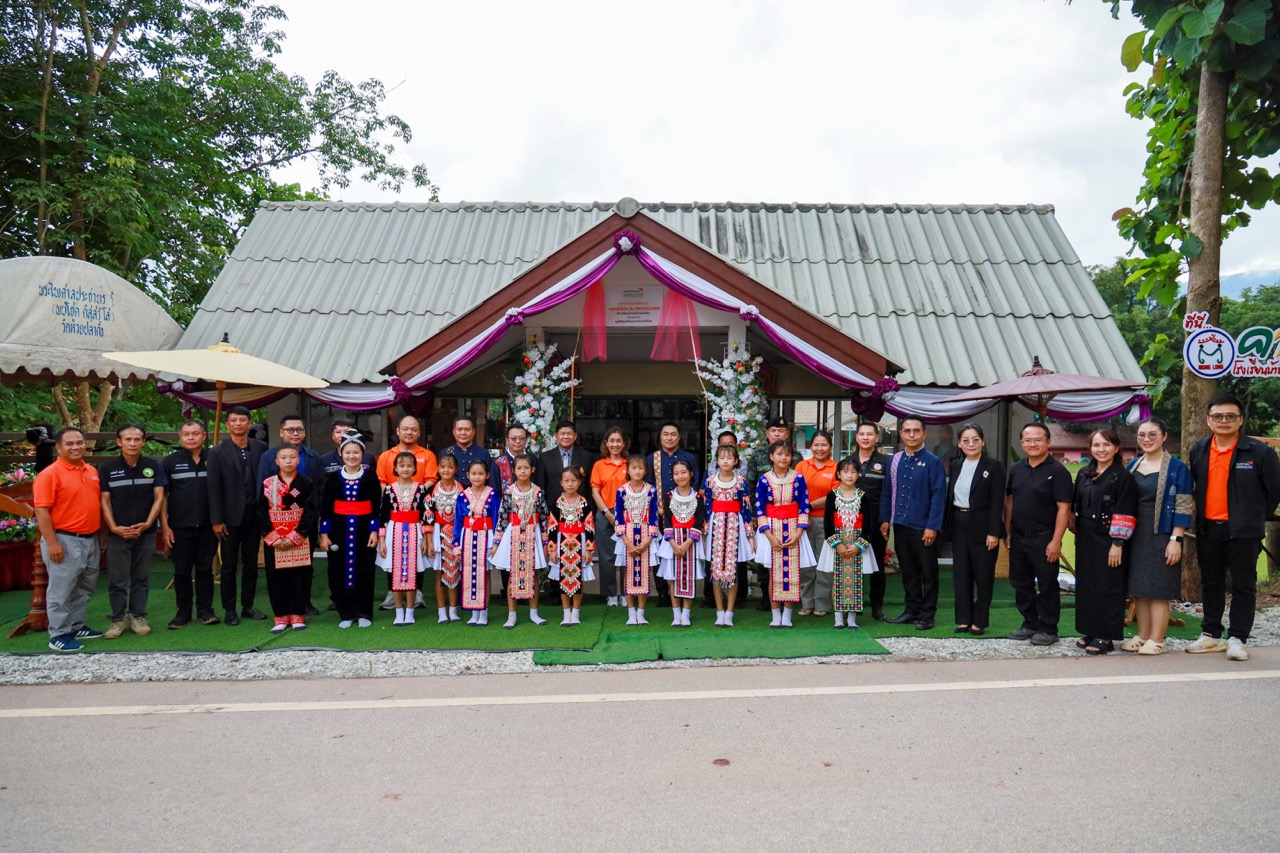
Beyond developing Hmong embroidered fabric products, the school has expanded hands-on learning to vocational service skills through the ‘Mong Long’ coffee shop, located in front of the school.
This is not merely a place to sell beverages, but a real-world training ground where students learn business management, customer service, and introductory marketing.
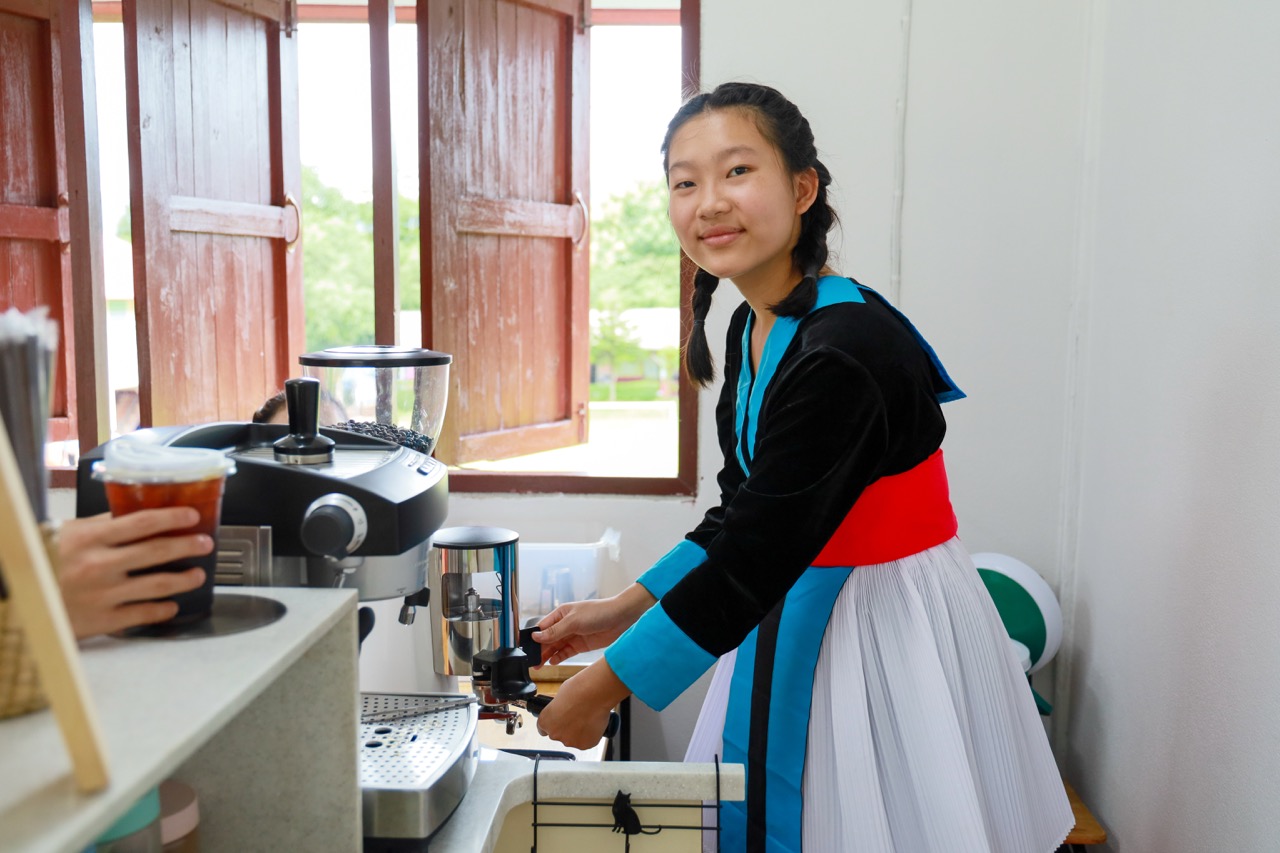
Arisa, an 8th-grade student known as ‘Nong Darna,’ is one of the young participants in the program.
“I was already interested in making beverages, and someone suggested that I give the activity a try, so I wanted to learn,” she shared.
What began as a simple interest has developed into real-world work experience. The students learn drink preparation, inventory management, customer service, and sales. This knowledge has helped her recognize future opportunities, especially in an area known for coffee cultivation and frequented by tourists.
“A lot of coffee is grown in our area, and tourists are constantly passing through. I feel that having these skills will allow us to build on them in the future,” she added.
When asked about her aspirations, Nong Darna answered with confidence: “I want to open a large coffee shop of my own.”
Today, the school coffee shop generates an average daily revenue of 300–400 baht, primarily serving students and travelers along the community’s main thoroughfare.
“We usually earn around 300 to 400 baht a day. Most of our customers are students, so we offer smaller-sized drinks for 10 baht each to make them affordable for our friends.”
World Vision Foundation of Thailand has also provided espresso machines, raw ingredients, and essential equipment, enabling students to learn the hospitality business through hands-on practice.
“It equips us with practical skills that we can build upon and use to generate income.”
‘Mong Long’: A Space of Opportunity for Youth
Today, products crafted by the students and community members are showcased and sold under the brand name ‘มองลอง’, or ‘Mong Long’, which reflects the community’s identity in three distinct ways:
‘Hmong Long’ signifies bringing Hmong heritage forward for the outside world to discover.
‘Long Mong’ (inviting a closer look) is an invitation for people to open their hearts to know the community and its local crafts.
And ‘Mong Long’ (crowning glory) reflects the pride of owning uniquely handcrafted heritage pieces.
The stories of Nong Pin, Nong Darna, and their peers demonstrate that effective vocational development does not come from technical instruction alone, but from designing learning environments that seamlessly integrate education, cultural heritage, and the local economy.
From classroom drawings to traditional Hmong embroidered fabric products, and from a modest school coffee shop to youth entrepreneurial aspirations, this initiative exemplifies development that begins by recognizing children’s potential—empowering them to grow proudly and sustainably from their own cultural roots.