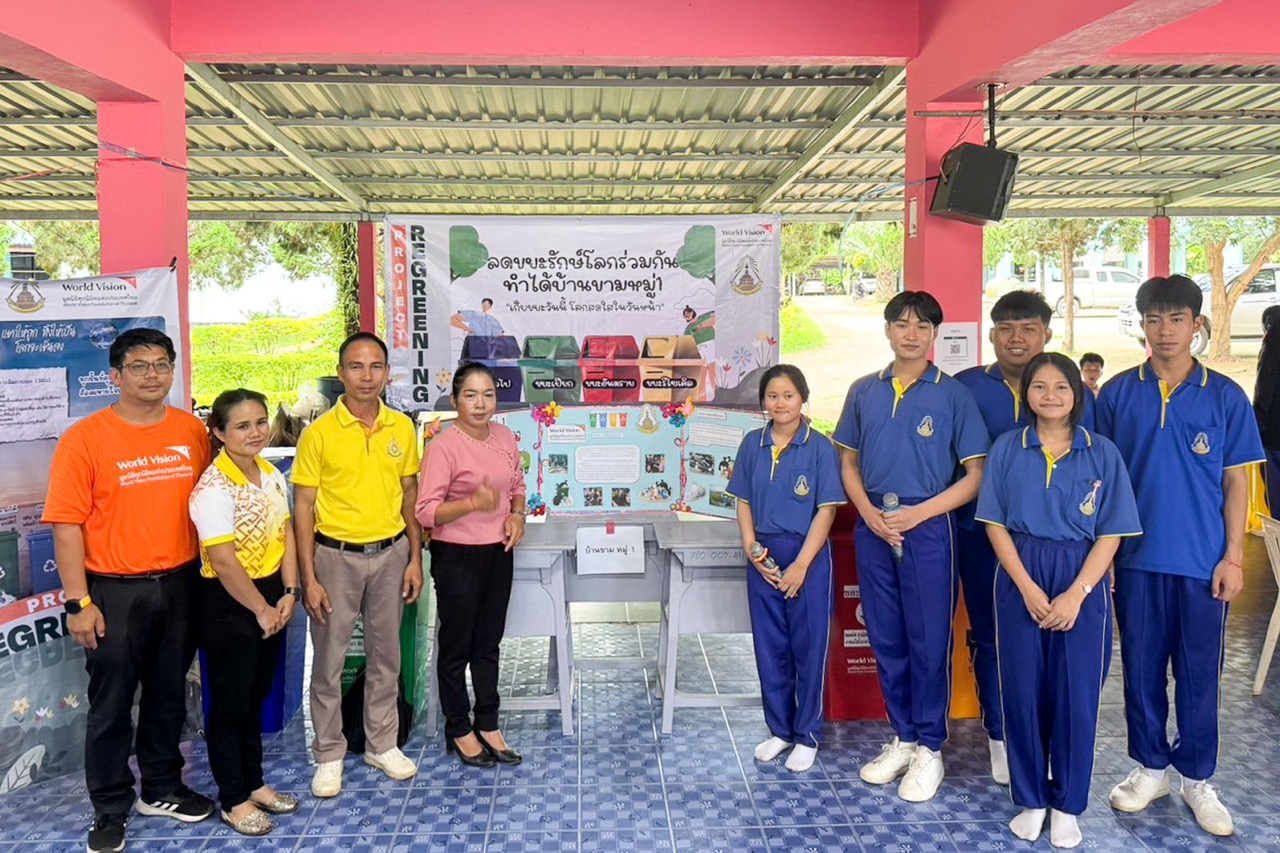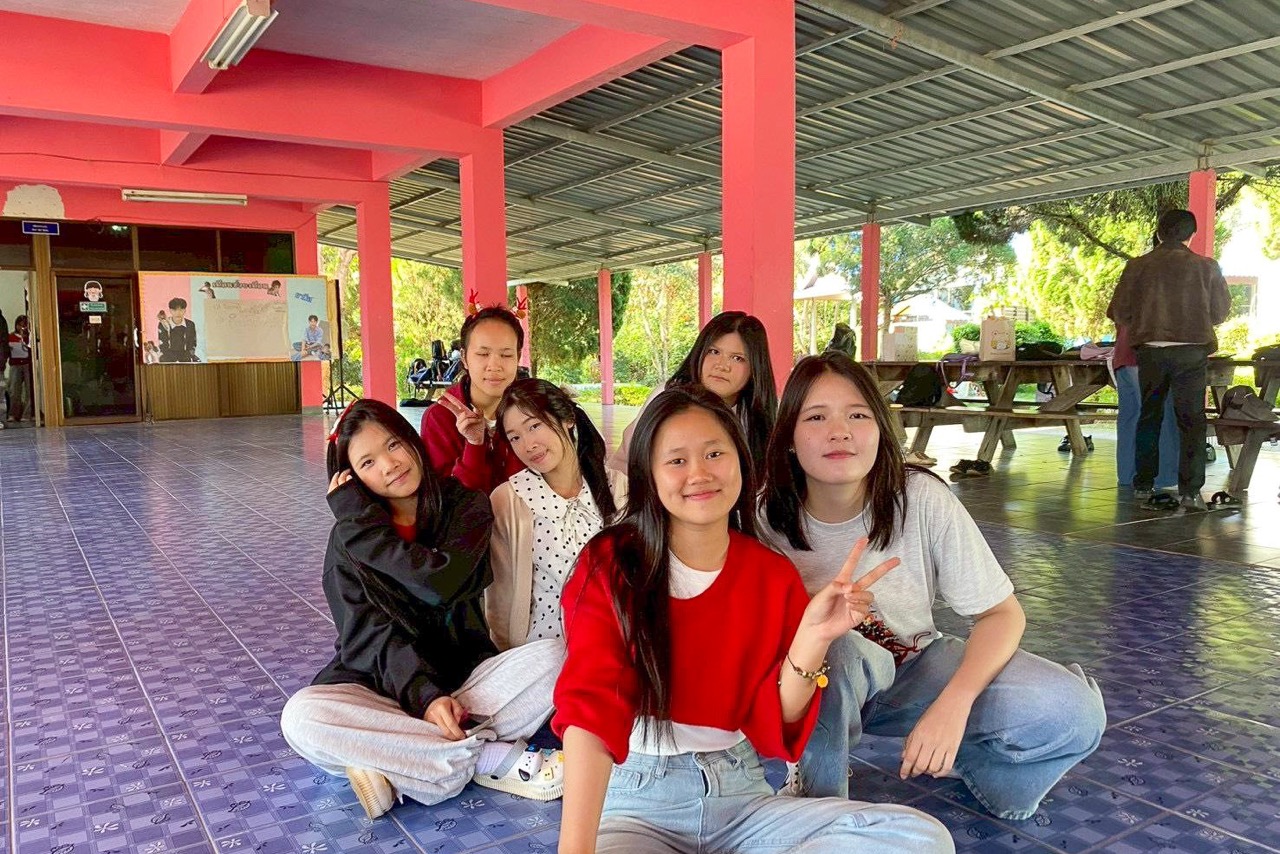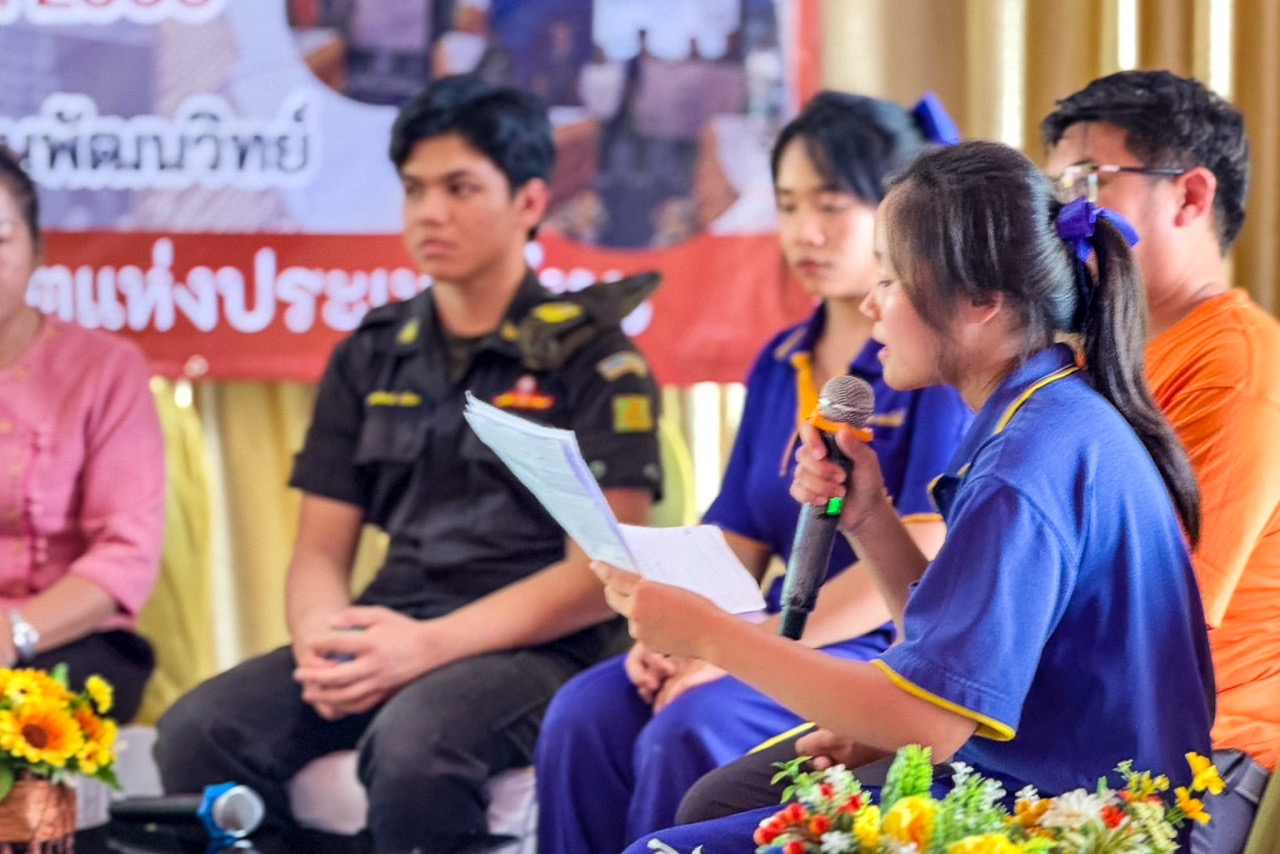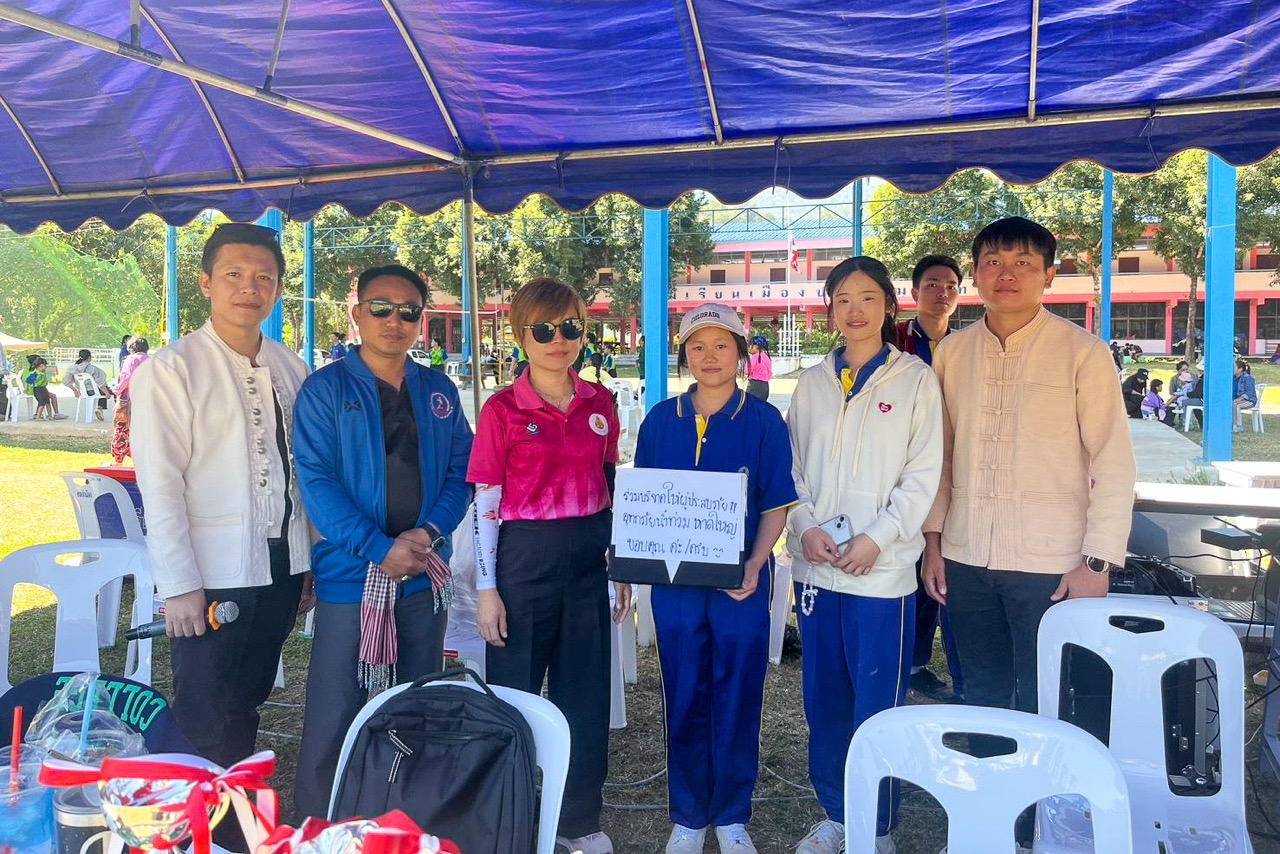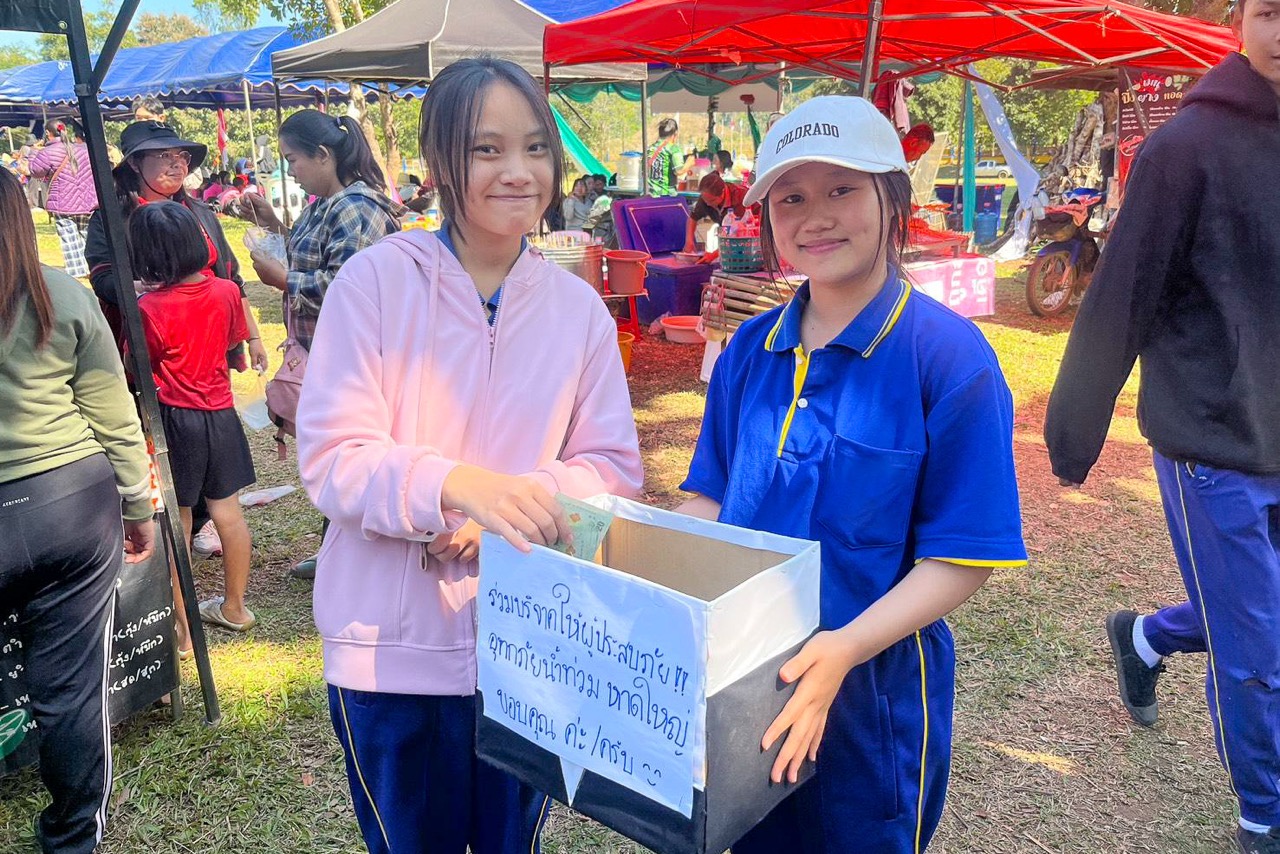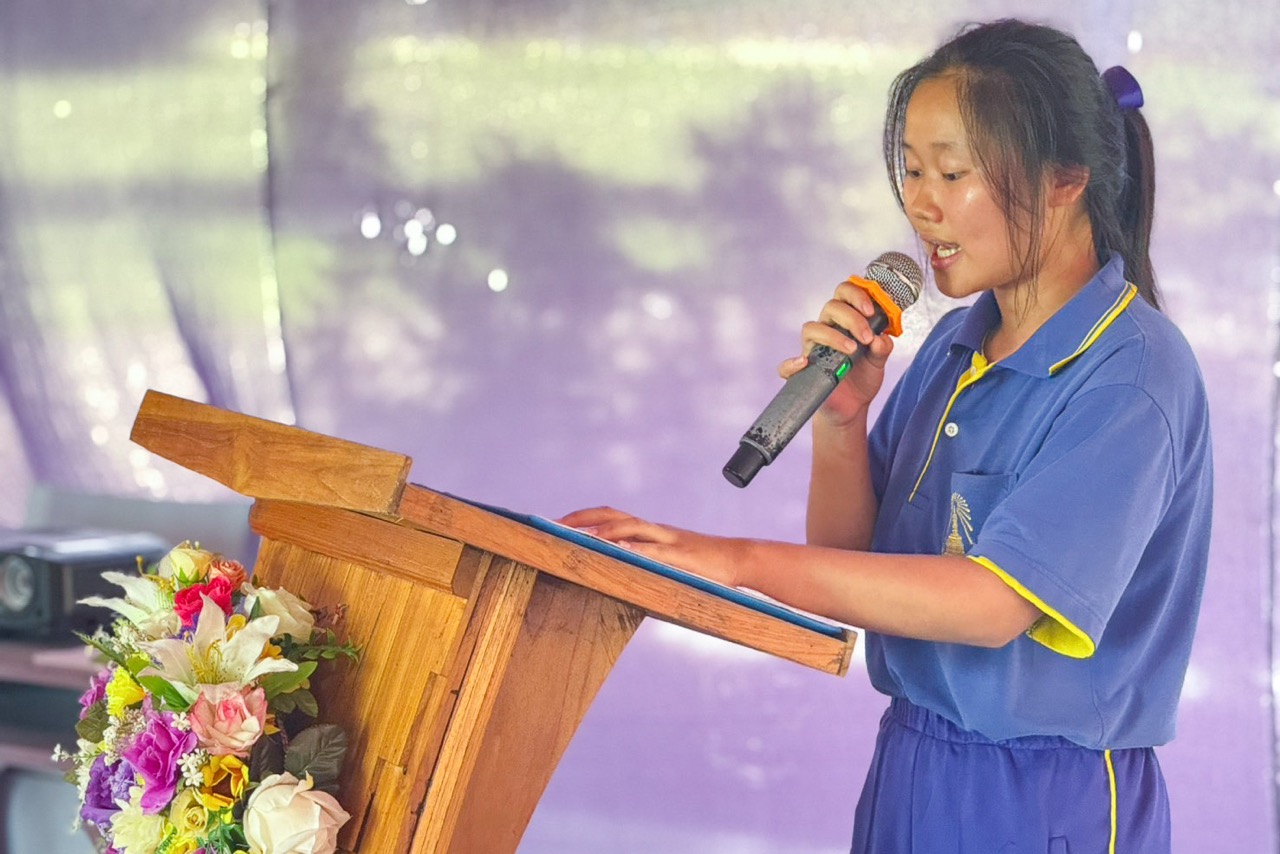
In Mueang Pan Community, a small district in Lampang Province, lives “Baiyok,” or Taksina, a 17-year-old girl (wearing a blue shirt). She grew up in a warm and close-knit extended family. Although the family’s financial situation was not stable—due to her father having suffered a work-related accident that left him unable to work for a period of time—her mother stepped up as the family’s main pillar. Despite the hardship, their home remained filled with smiles and encouragement.
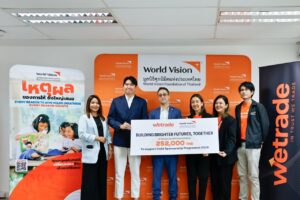
One thing Baiyok remembers most clearly, like a wind beneath her wings during difficult days, was the education support she received through the Child Sponsorship Programme of World Vision Foundation of Thailand. This support helped ease the family’s burden through the provision of school uniforms, learning materials, and even blankets during the cold season—support that enabled her to “never stop dreaming.”
“I never viewed the opportunity from World Vision as just assistance. It became the motivation that inspired me to give something good back,” — Baiyok
Beginning with a Small Piece of Waste
From a child who was once a “recipient,” Baiyok gradually—and unknowingly—grew into a “giver.”
Every day at lunchtime, the school grounds would be littered with snack wrappers, plastic bottles, and scattered waste after dogs rummaged through trash bins. This was a sight that bothered many people, including Baiyok.
One day, she turned to her friends on the Student Council and asked, ““Wouldn’t it be nice if our school were cleaner?”
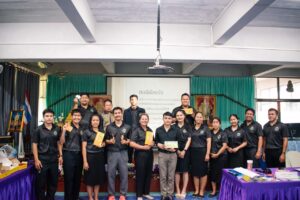
Her friends nodded in agreement. That simple question marked the beginning of the Youth Environmental Conservation Group (Waste Management), established with the support of World Vision Foundation of Thailand.
World Vision Foundation of Thailand is committed to youth development through a systematic approach that strengthens the capacity and resilience of children and young people. The organisation focuses on supporting essential life skills, promoting youth groups and children and youth councils, and preparing young people to step into leadership roles that can drive change and foster sustainable community development.
In addition, World Vision places strong emphasis on creating meaningful spaces for youth participation. Young people are encouraged to exchange perspectives with community leaders and engage in dialogue on issues related to children’s quality of life and well-being. This ensures that youth voices are heard and genuinely reflected in community development initiatives that respond to the real needs of children.
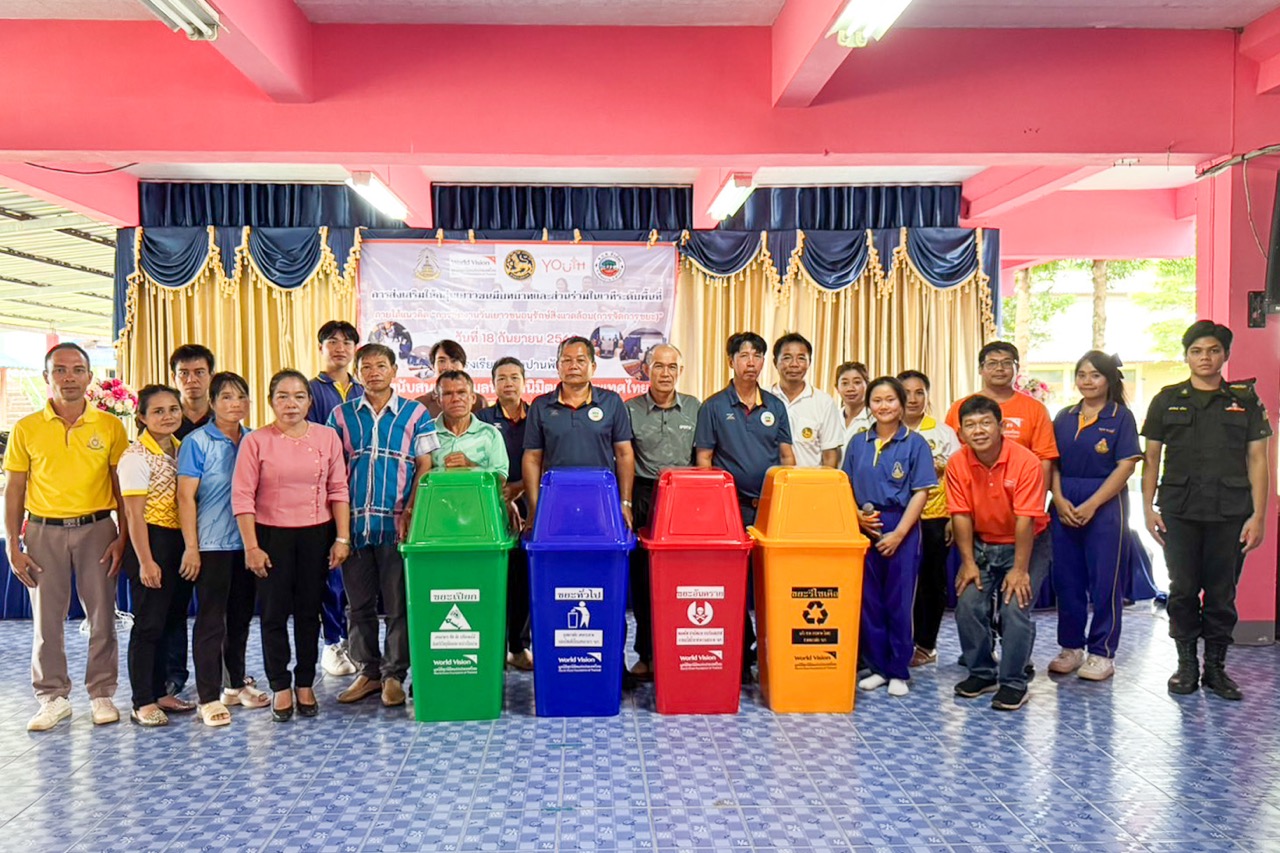
Baiyok shared: “World Vision has supported us in many ways—from providing funding for activities such as environmental training, producing awareness-raising and educational materials for students and the community, to providing waste-separation bins for both schools and villages. They also created platforms where my friends and I could present our ideas directly to community leaders.”
At present, the implementation of the “Youth Environmental Conservation (Waste Management)” project has become a significant turning point for the school. Students have begun disposing of waste properly, collecting rubbish that does not belong to them, and separating bottles, caps, and labels to sell to the “Waste Bank” established under the project.
Seeing these changes made Baiyok’s heart race.
“The day I saw the younger students picking up rubbish on their own, without anyone telling them to, I truly felt that a small voice from one child can really change an entire school,” she shared.
When Children’s Ideas Reach the Community
While waste management at school was manageable, waste burning in the village proved to be a much more difficult challenge.
The children decided to approach the village head to talk about environmental issues using the simplest language possible. Many adults initially thought the children were not serious. However, Baiyok stood up and said:
“If we continue burning waste, people in our village will become more ill. We can start by separating waste first—we don’t have to change everything at once.”
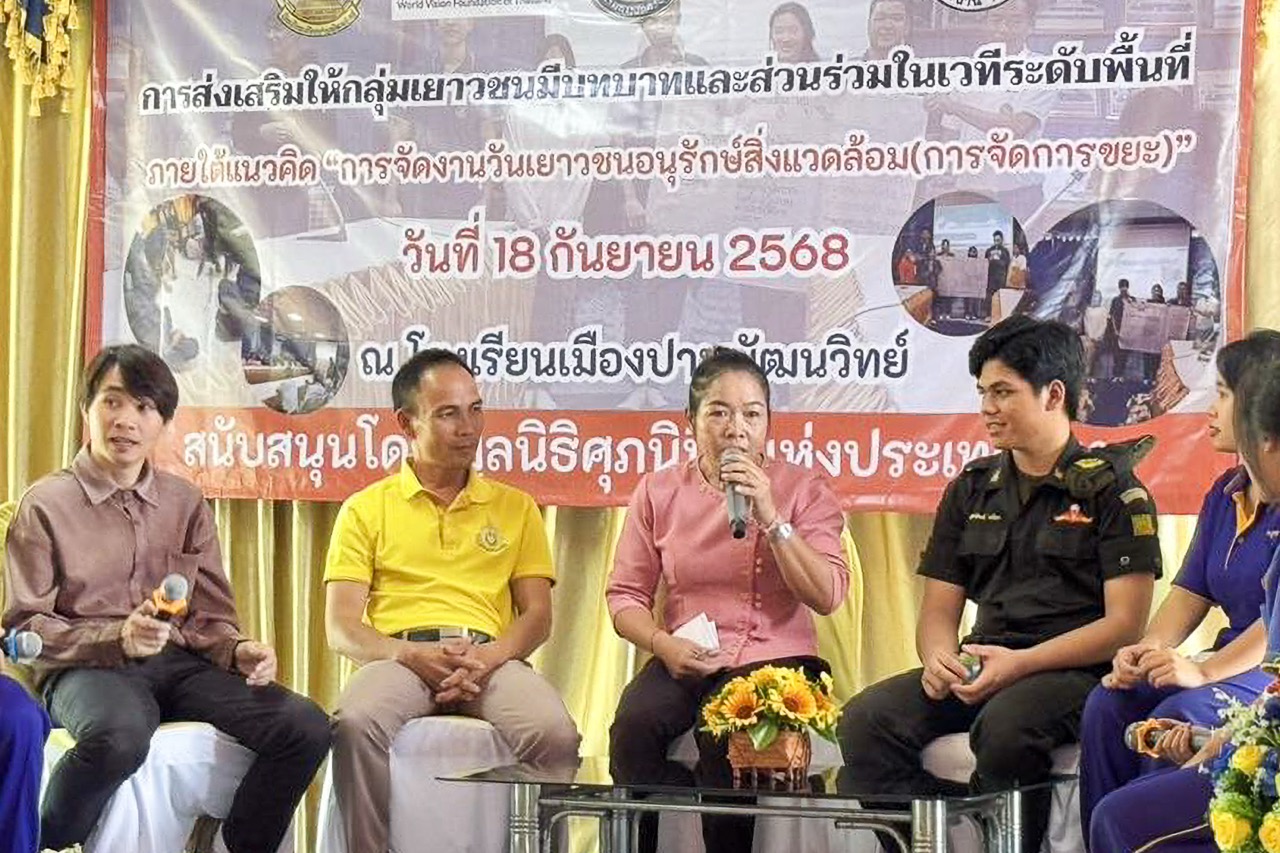
World Vision stepped in to coordinate with community leaders—from sub-district heads and local administrative organisations to village representatives—resulting in dialogue platforms that brought together children, teachers, parents, and community leaders.
This collaboration led to concrete actions, such as establishing waste collection points in the community, initiating village clean-up days, and proposing an annual “Clean Village” competition.
Baiyok recalled the moment with sparkling eyes:
“The adults listened to us. I was so happy. That’s when I realised that even one child’s idea can change a whole village—if someone believes in us.”
Growing, Together
Months of continuous work helped Baiyok realise something important. She was no longer just a child who wanted to see a cleaner school—she had become a youth leader creating change across the entire community.
“I learned about leadership, communication, coordination, and teamwork. World Vision made me believe that every child has value and the ability to do great things.”
When adults provide support and children are given space to express themselves, their voices can travel much further than expected.
Baiyok’s story clearly reflects that when children are given opportunities, safe spaces, and trusted by adults, they can transform schools, inspire new behaviours among peers, shift adults’ mindsets, and turn environmental challenges into new opportunities for their communities. And it all began with one child who simply did not want to see piles of waste left untouched.
“If one young person stands up and another 100 follow, our world would become a much better place,” — Baiyok
World Vision Foundation of Thailand continues its mission to create safe spaces and strengthen the potential of every child—empowering them to grow into change-makers within their own communities, step by step, voice by voice, person by person. Because when children are given opportunities, the whole world gains opportunities too.