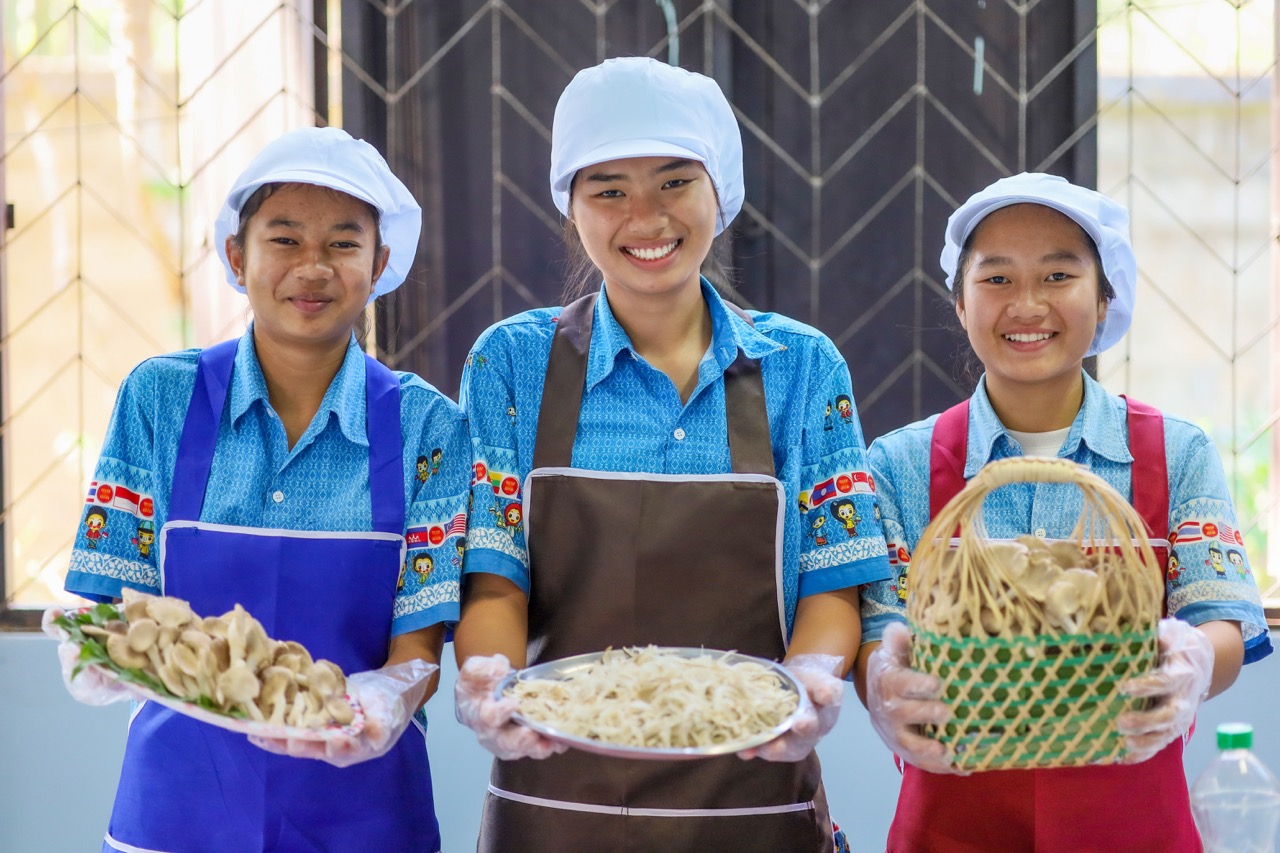
In many areas of Thailand, lunch may be just another meal of the day. But for a considerable number of children, it is an opportunity for growth.
The World Vision Foundation of Thailand does not view food as merely short-term assistance, but as a starting point for development—one that systematically connects learning, vocational skills, and income for children and their families. The Self-Reliant and Sustainable Community Development Project in Chat Trakan District, Phitsanulok Province, is one example of such transformation.
From the classroom to a ‘hands-on learning system’
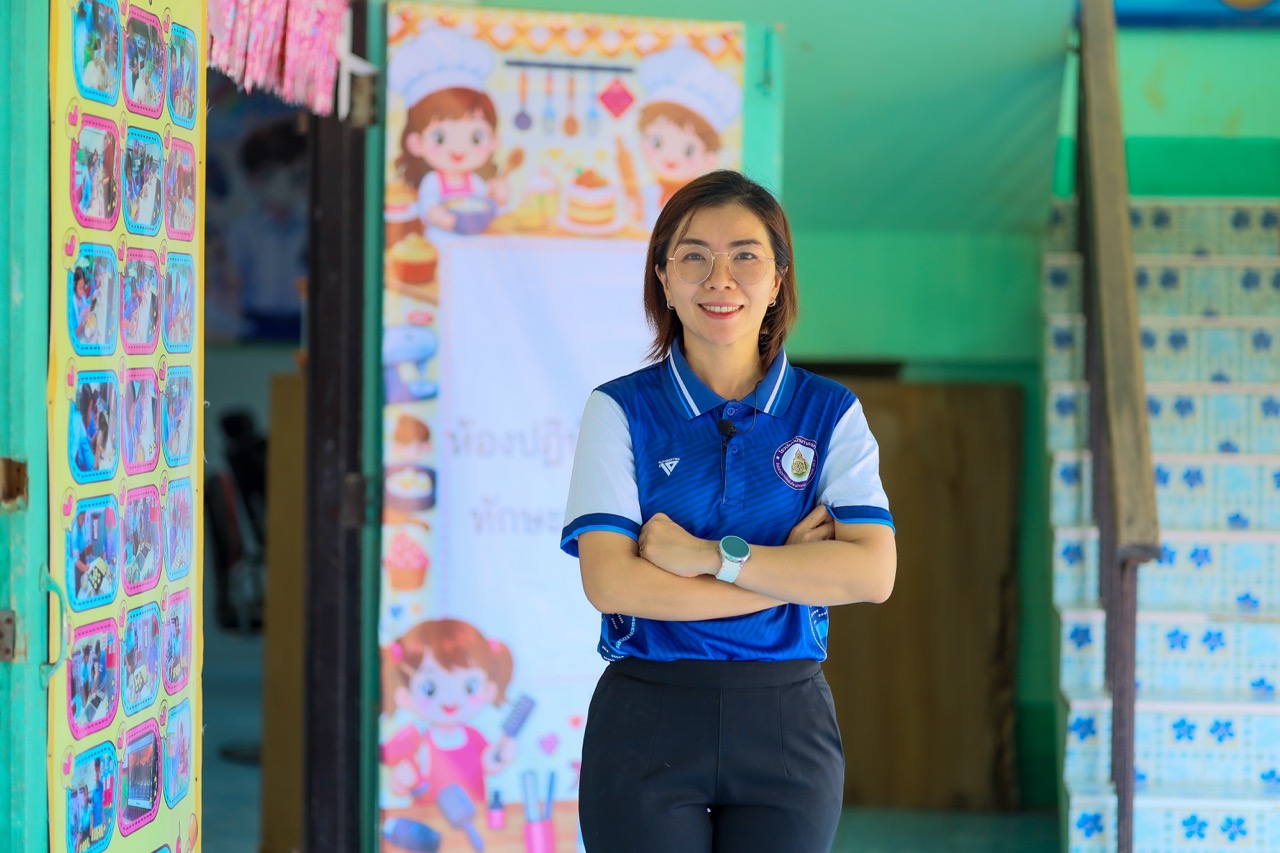
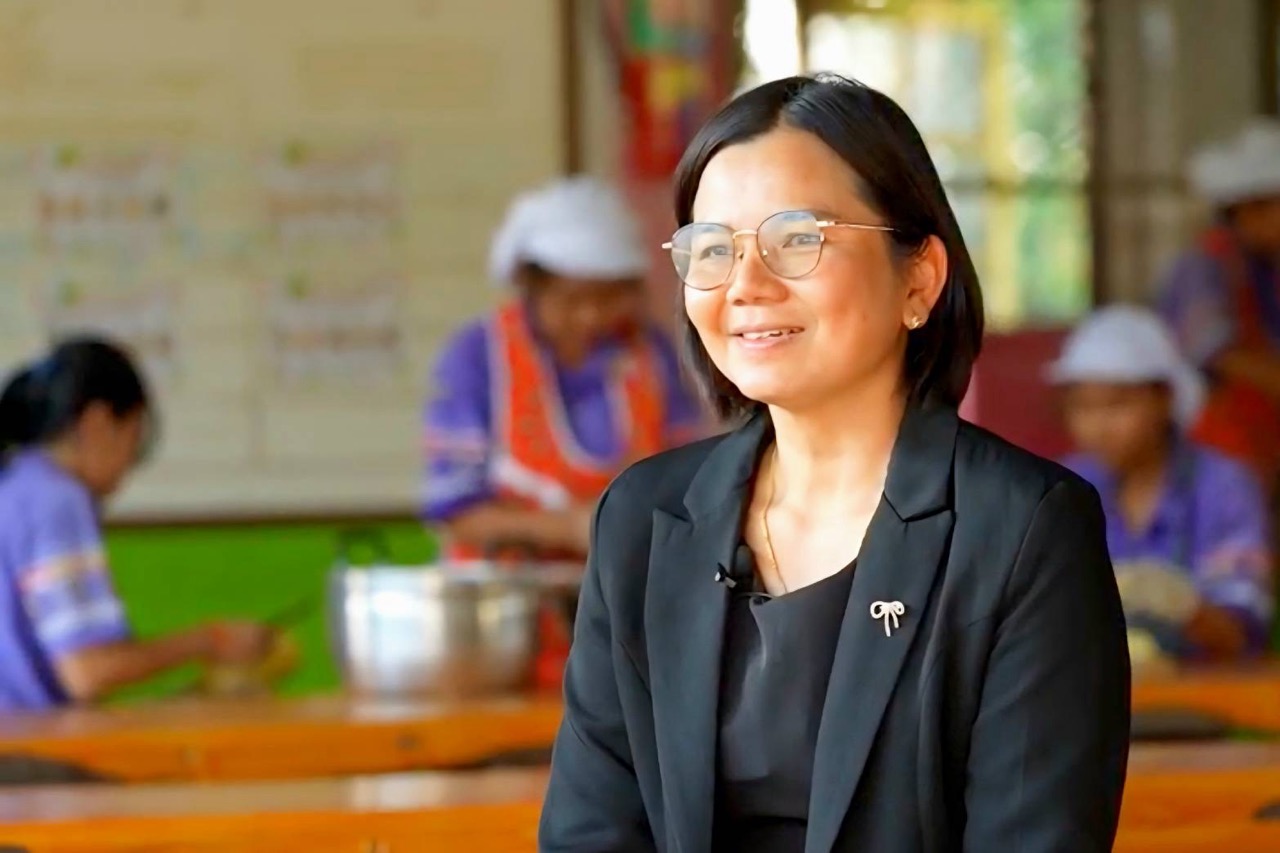
“We want children to have more than just classroom knowledge. Promoting or training in vocational skills helps equip them with additional competencies beyond what they should receive in class. These should go hand in hand,” said Ms. Sukanya Konsarn, Director of Ban Tha Sakae School.
Although most parents in the area are engaged in agriculture, the school sees an opportunity to go further—not just to grow for consumption, but to grow effectively, safely, process products, and sell them.
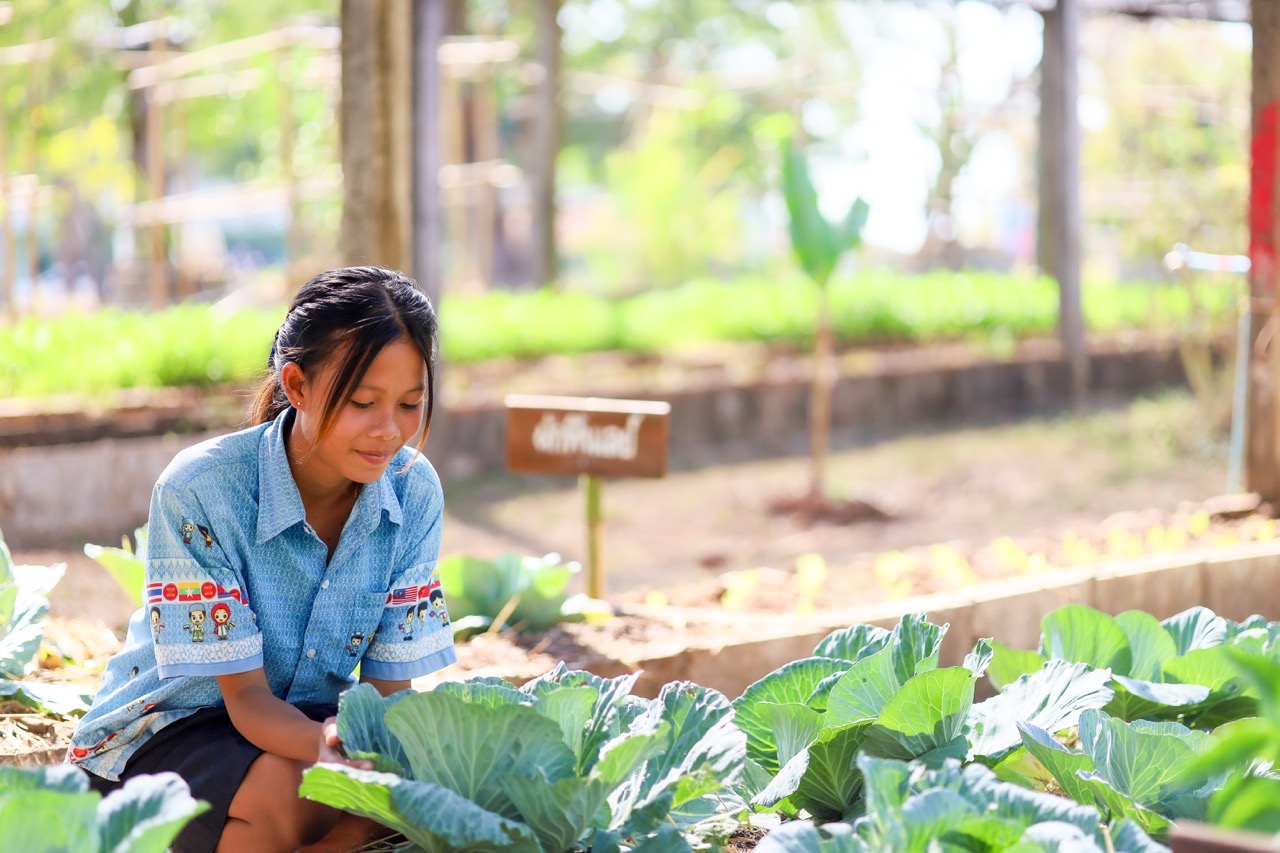
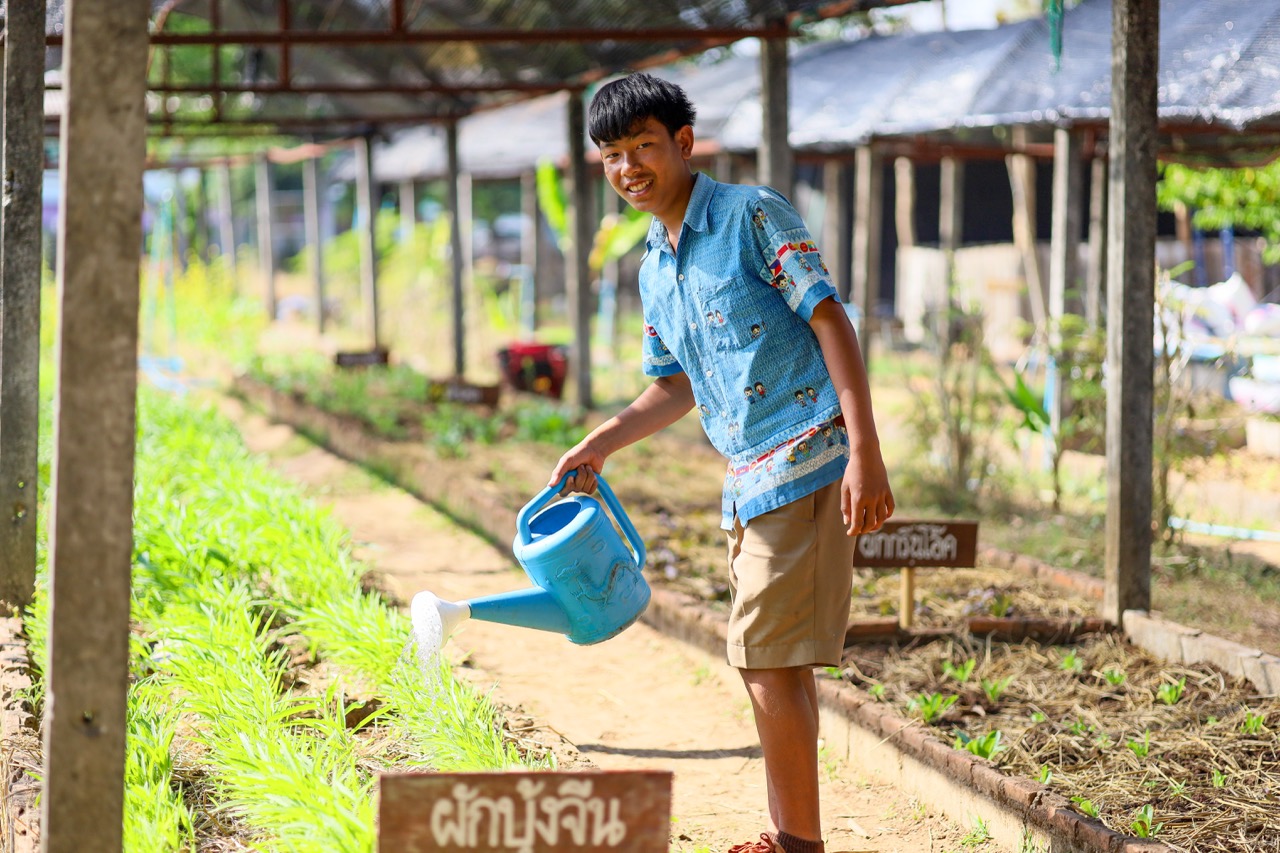
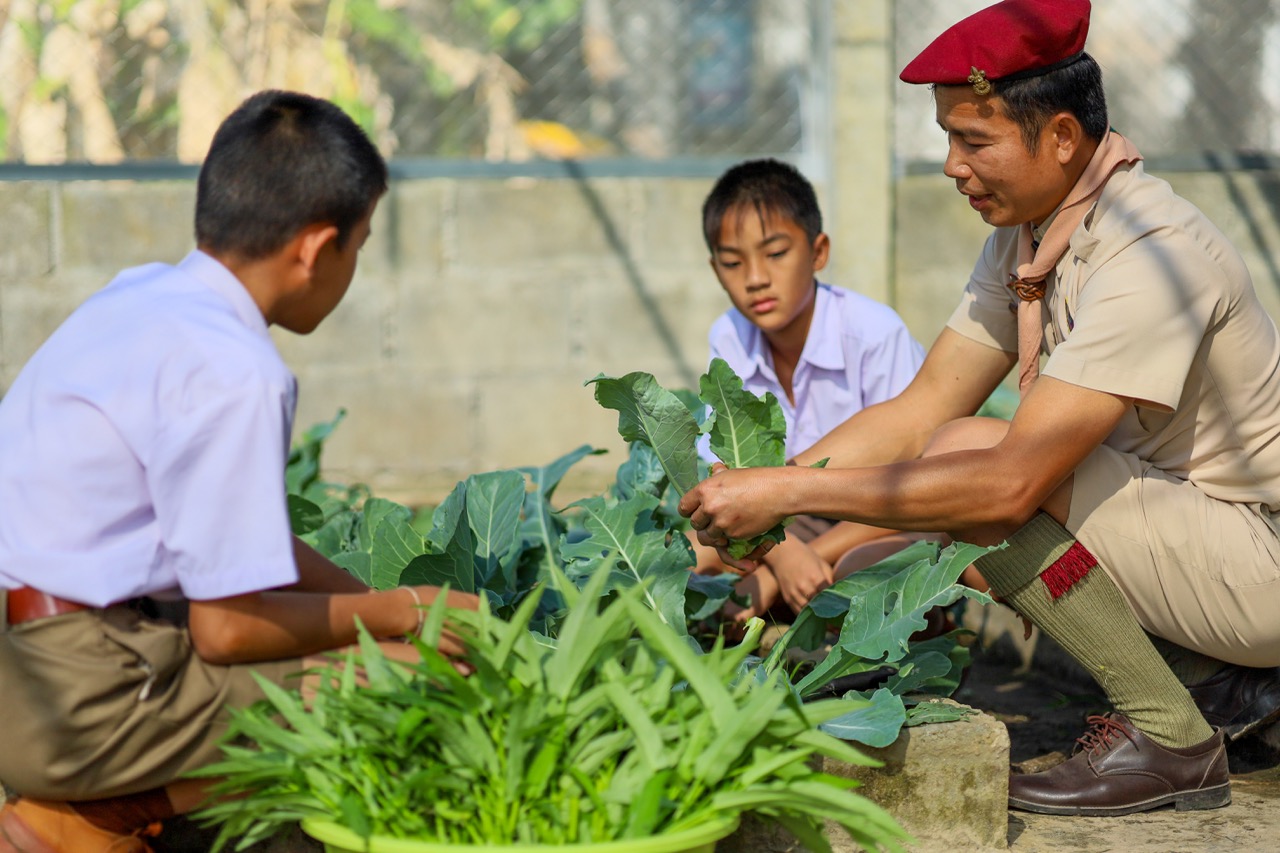
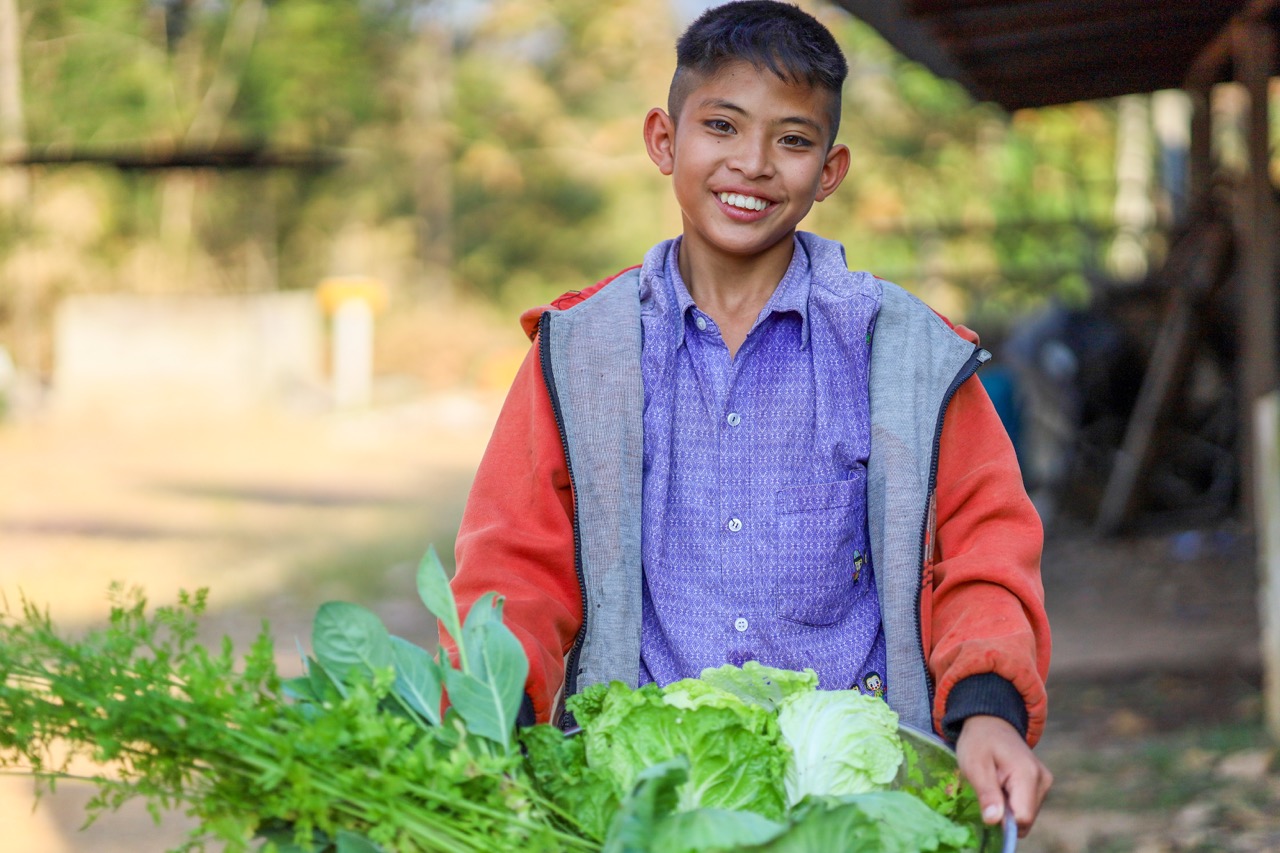
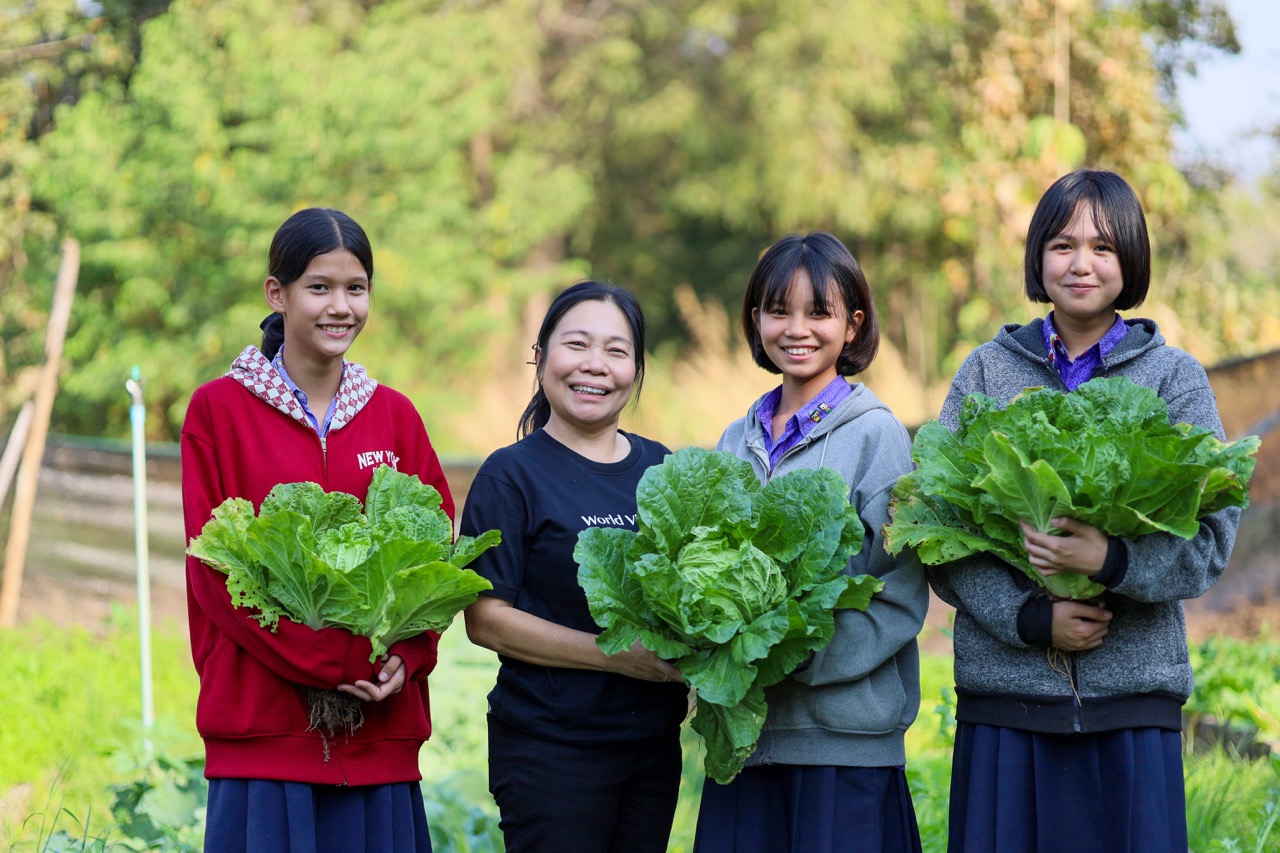
At Ban Tha Sakae School, the agricultural plots are not merely spaces for growing vegetables—they are living classrooms that allow children to learn through real practice. Activities range from organic vegetable cultivation, aquaculture, resource management, and mushroom farming to product processing for sale.
“Children get to actually do the work and learn through practice. This helps build discipline, responsibility, and happiness more than just sitting in a classroom,” the school director added.
These activities transform students into active practitioners, and further develop them into future income generators.
A circulation system that drives continuity
At the heart of sustainability in this project is not just food production—it extends to resource management systems. Produce from the school farms, such as vegetables, mushrooms, and fish, is sold, and the income is managed through a revolving fund. This fund is used to purchase seeds, procure materials, and support long-term production development.
“Revenue from selling our produce is systematically allocated. A portion is set aside as a revolving fund so that the project can continue, not just start and end,” Ms. Sukanya explained.
This reflects a system designed to emphasize self-reliance rather than dependence solely on external resources.
Developing ‘young entrepreneurs’
Ban Chat Trakan School is another example of integrating the “School Lunch Agriculture Project” into a systemic development approach.
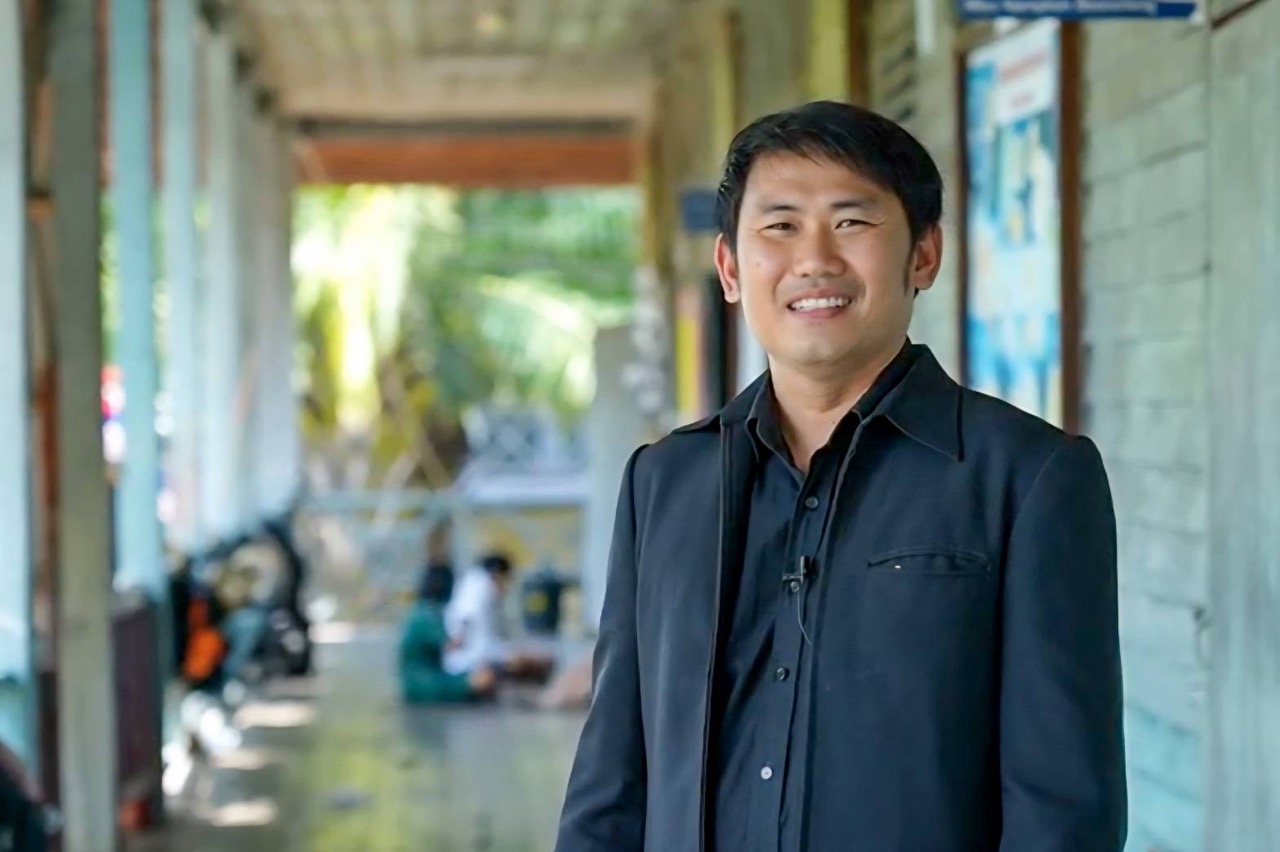
Mr. Jaturapong Saiarun, Director of Ban Chat Trakan School, stated:
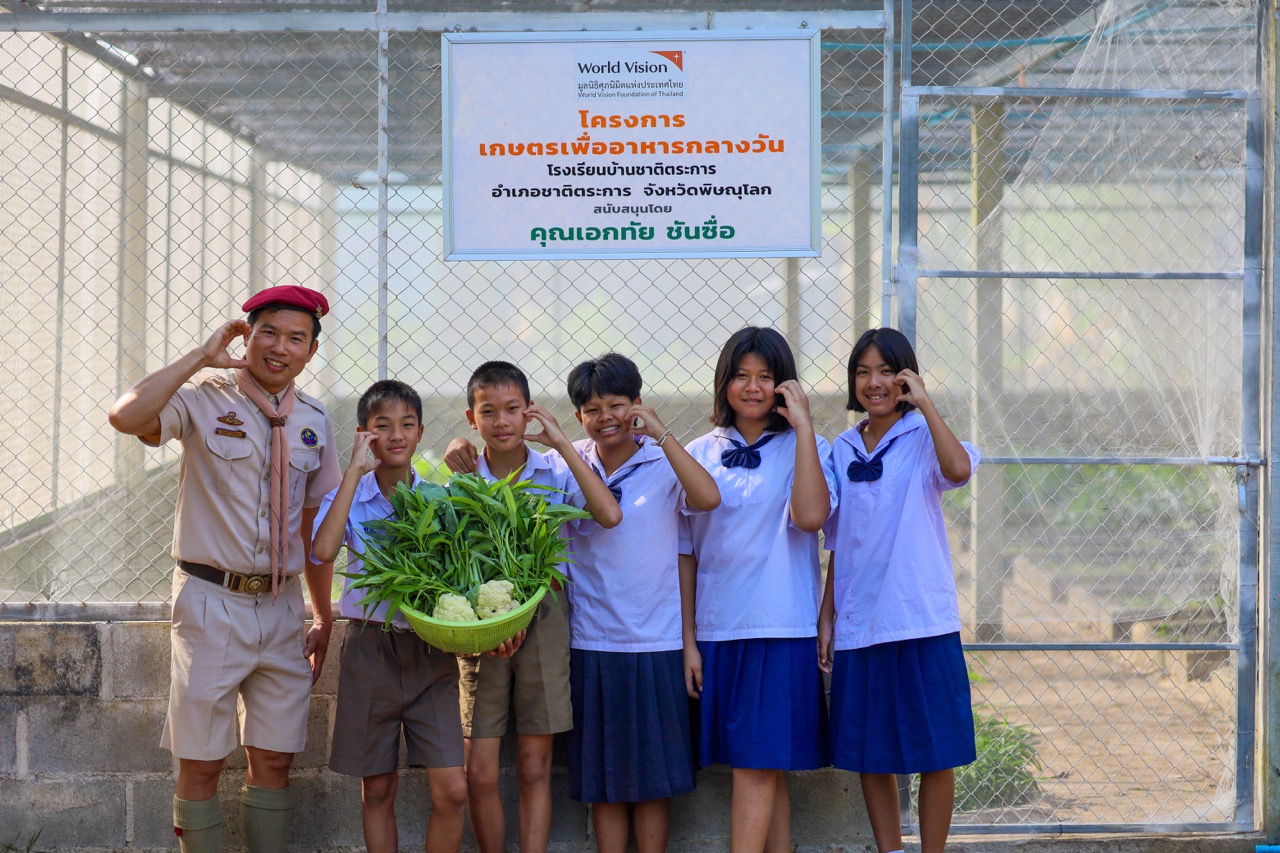
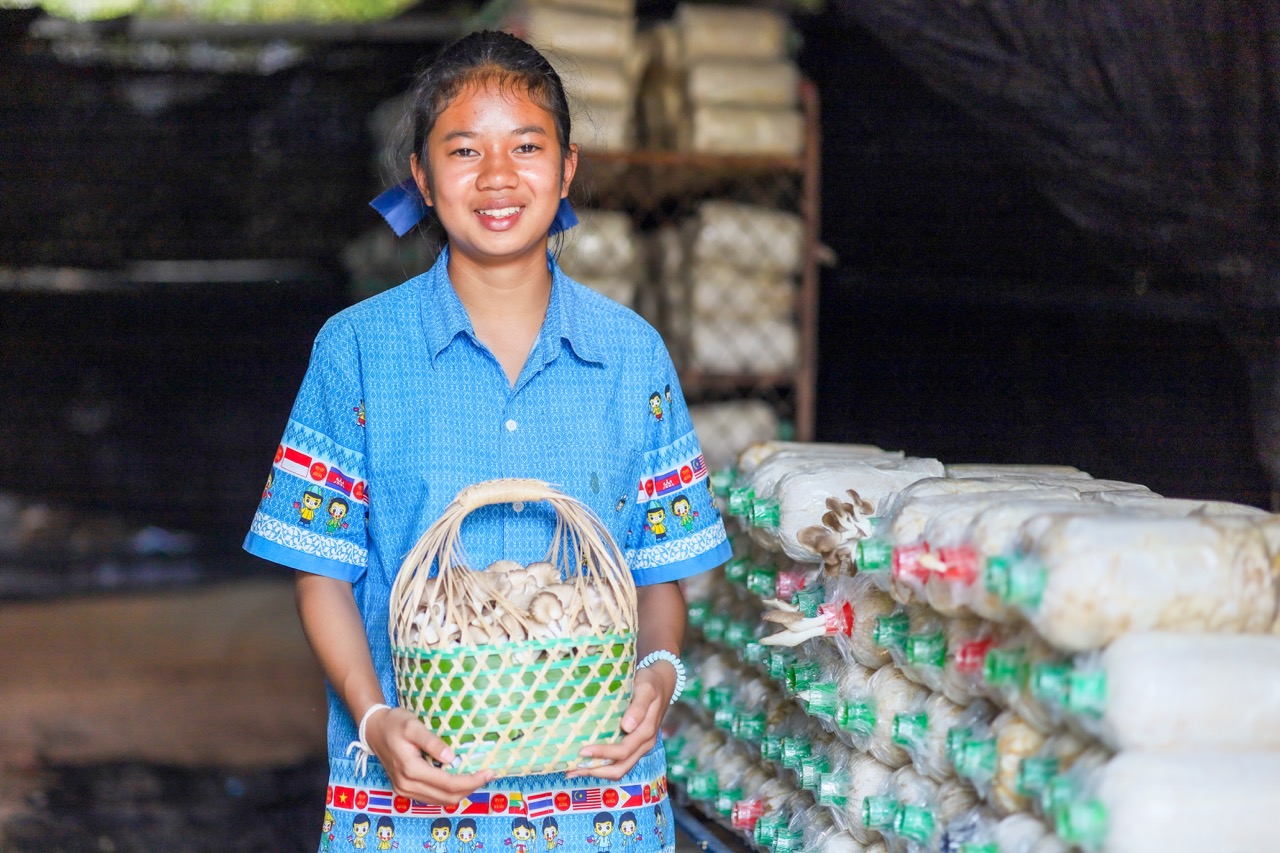
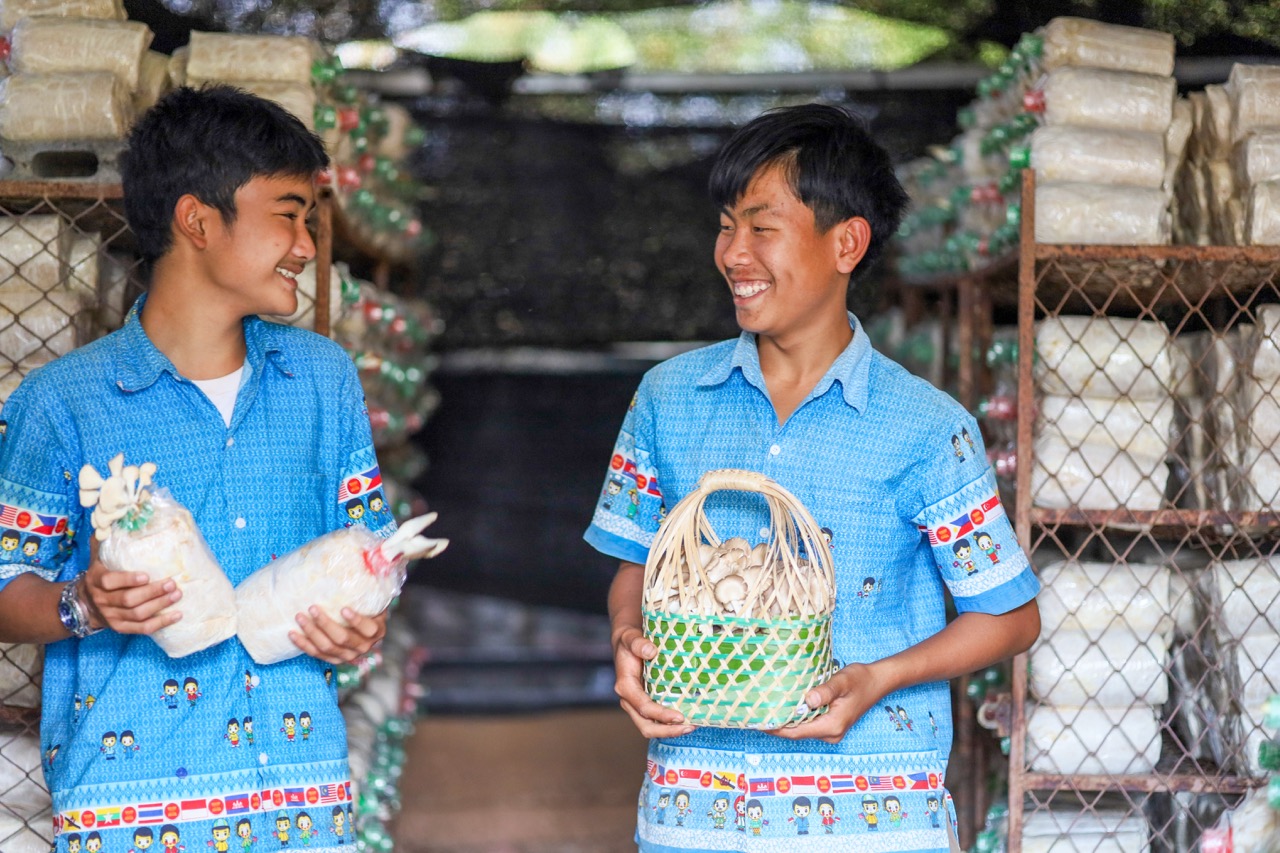
“The World Vision Foundation of Thailand has supported school lunch agriculture activities such as growing kitchen vegetables, cultivating oyster mushrooms, raising fish, and greenhouse crop production. These not only improve nutrition but also provide students the opportunity to sell their produce, generating supplementary income and easing their families’ financial burdens.
In addition, the school collaborates with the Foundation and partner agencies, such as the District Agricultural Office, to organize youth agriculture activities. Student leaders are trained and then share knowledge with peers and the community. The school has integrated these supported activities into its annual operational plan, with clearly defined budgets, responsible persons, and student leader groups to ensure continuity and sustainability.”
From produce to ‘products’
When there is excess produce or unsold goods, the school does not see them as ‘leftovers,’ but as ‘new learning opportunities.’
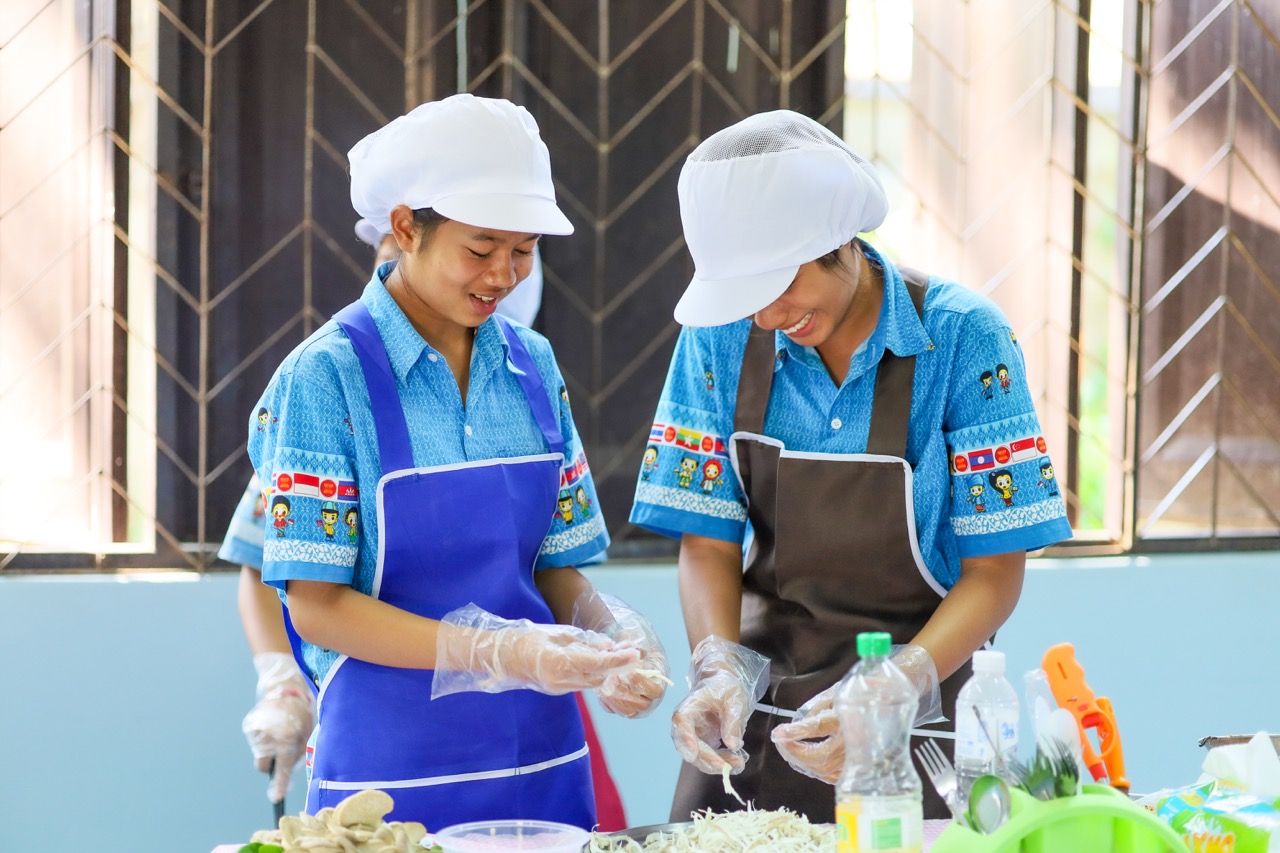
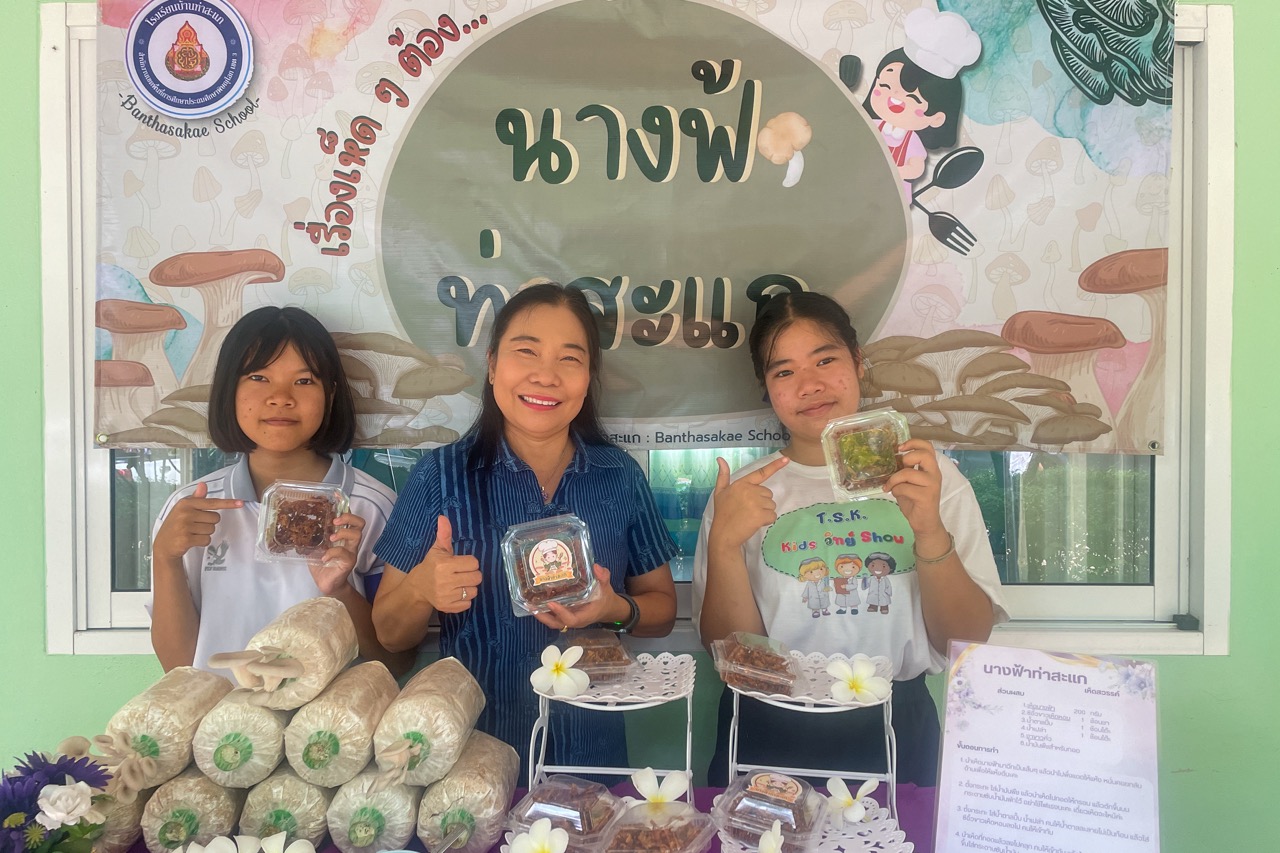
“Mushrooms don’t last long. If we can’t sell them all, we process them to add value and help students practice home economics skills,” Ms. Sukanya, Director of Ban Tha Sakae School, said about their processed mushroom products.Although still in the experimental stage, the process is already developing students into young entrepreneurs.
Meanwhile, Ban Noen Suwan School has expanded this concept by processing potatoes, a local resource.
Ms. Arisa Kumwandi, the school director, explained:
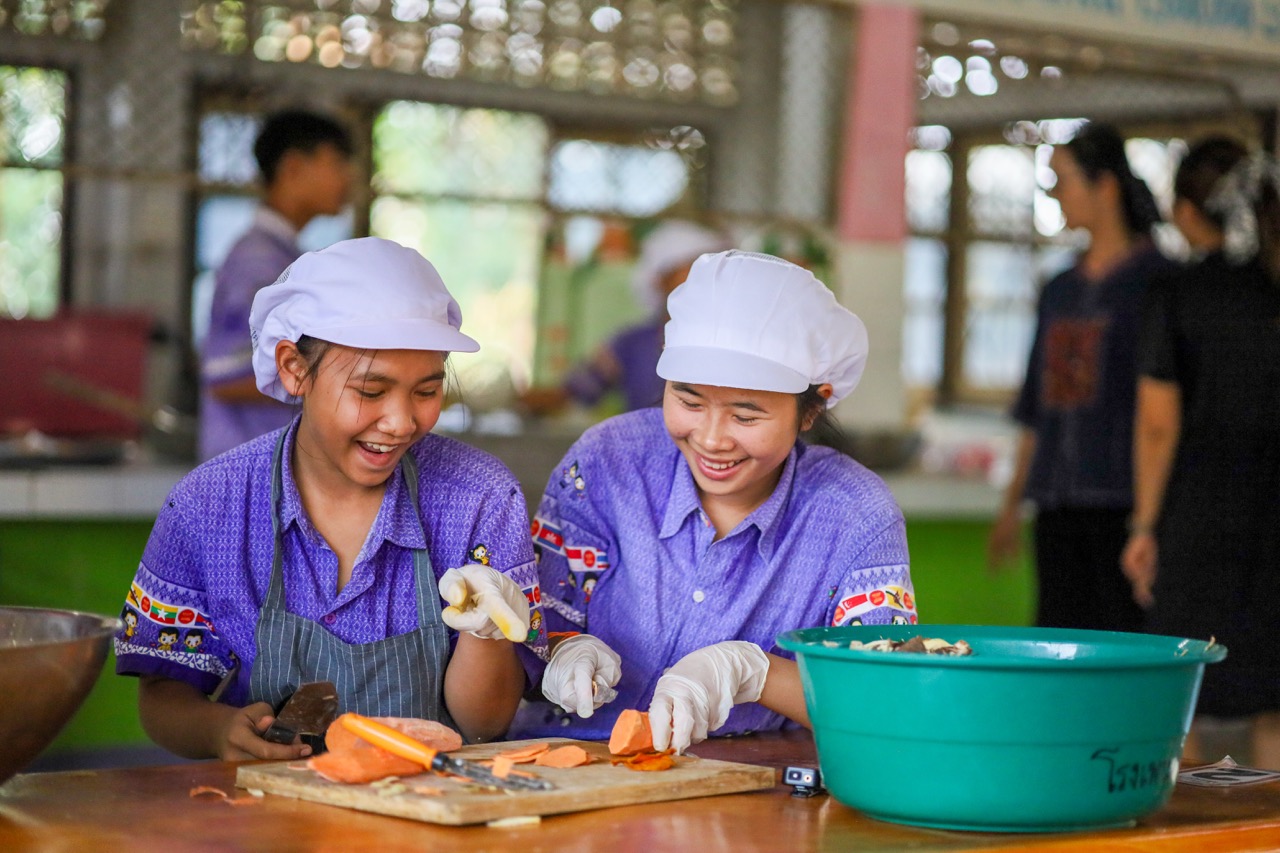
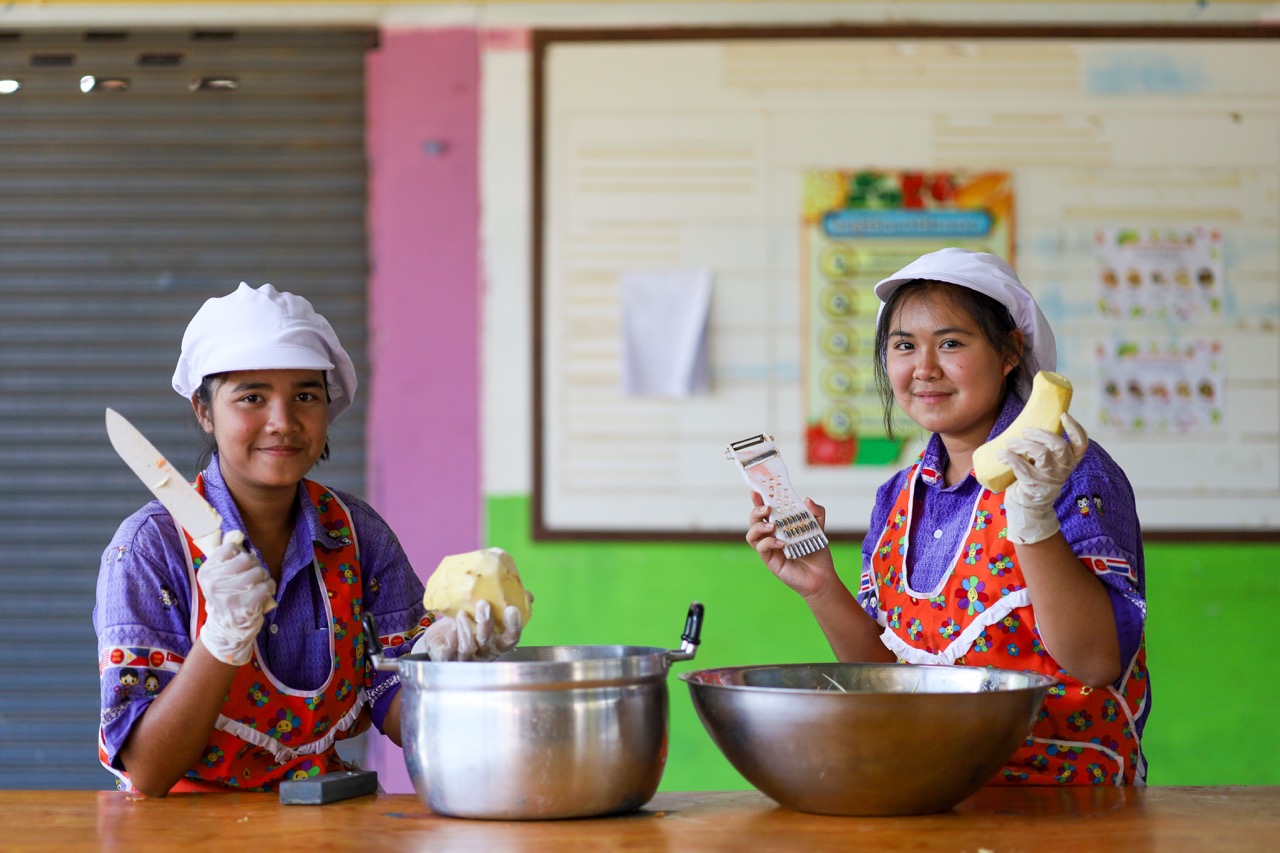
“Our students are currently processing sweet potatoes, which are abundant in our community. Since sweet potatoes are widely grown here, the school sees an opportunity to add value through processing. This activity allows students to learn everything—from selecting raw materials, peeling, and cutting to processing and packaging products. They gain a full understanding of the production process and can build on it in the future.
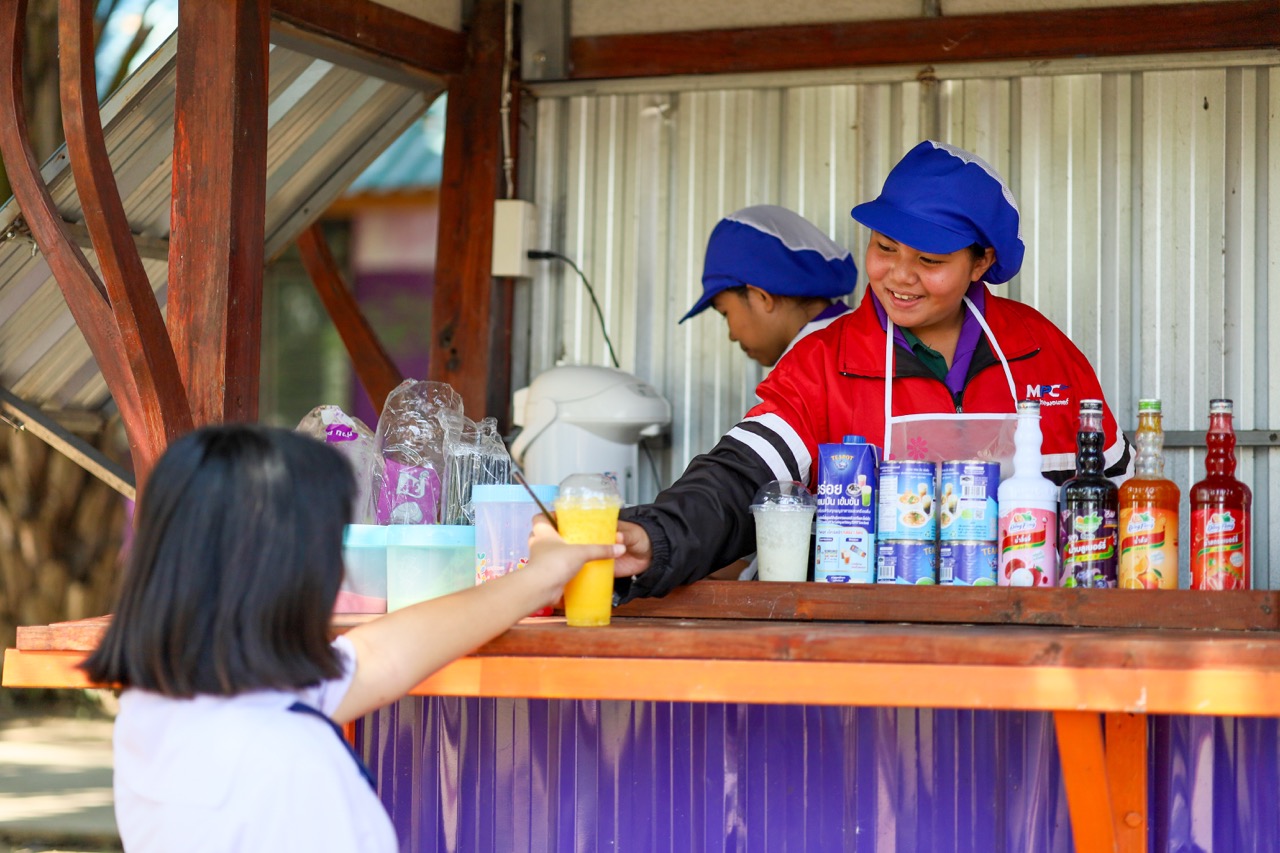
Additionally, our students’ processed sweet potato products are sold in the school café, another project supported by the Foundation. These products have also been submitted to a regional student arts and crafts competition, where they received a gold medal.”
Project impact: From school level to community livelihoods
In many communities, children and families still face challenges related to income and food security, especially among farmers and daily wage workers who have limited access to resources and basic services.
As climate change continues to affect income and agricultural productivity, these risks further increase household vulnerability.
The World Vision Foundation of Thailand has therefore developed a model that connects schools, households, and communities to strengthen food security and self-reliance.
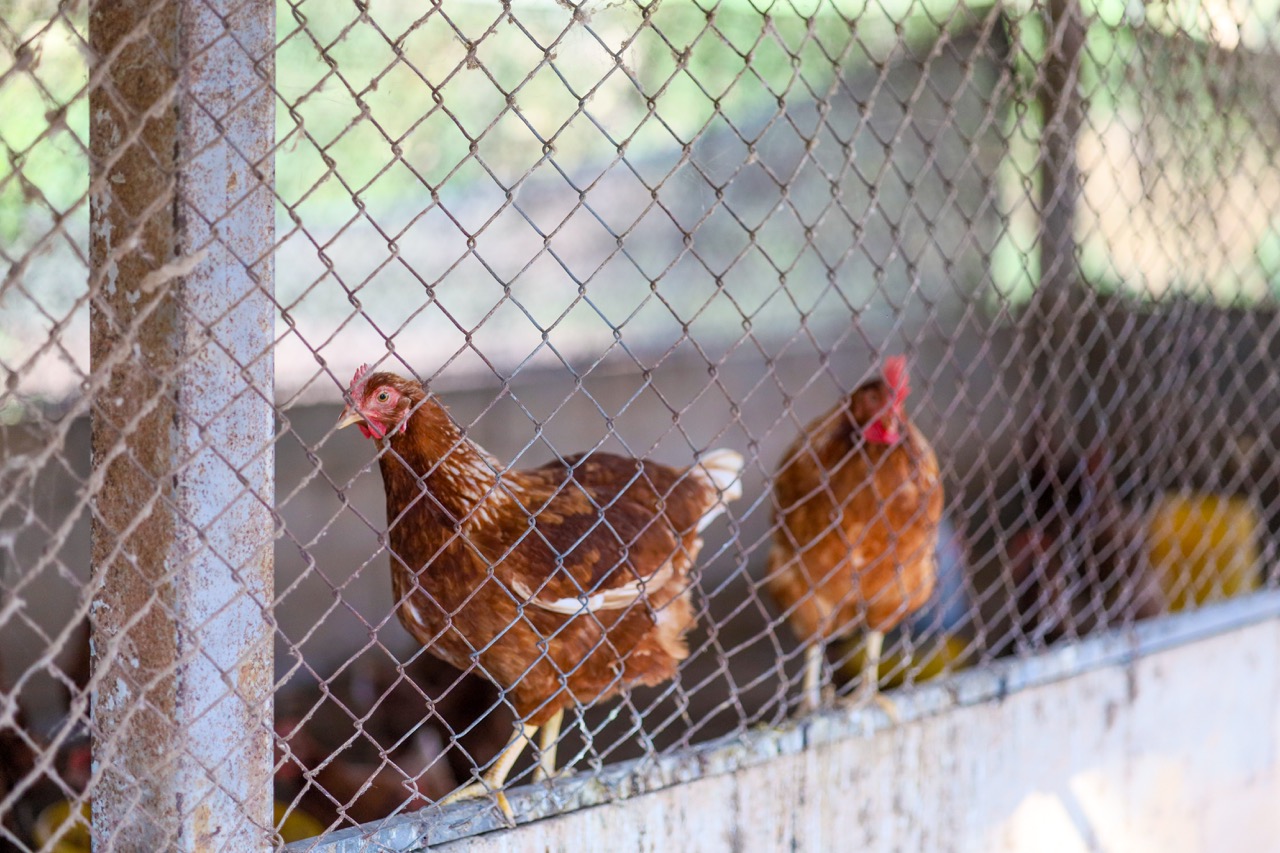
School-based food production initiatives—such as vegetable gardening, mushroom cultivation, raising chickens, pigs, fish, frogs, and even oyster farming in cages—not only provide food but also generate income for schools and communities, alongside mangrove conservation efforts.
Household food support initiatives promote self-reliance by supporting rice seeds for cultivation and conservation, home gardening, and raising chickens, ducks, fish, and pigs to increase income and ensure food security.
Organic agriculture initiatives focus on sustainable farming, reducing production costs, and protecting the environment. These include providing knowledge on organic farming and supporting essential materials and equipment such as irrigation systems, raised garden beds, plastic-lined ponds for catfish farming, and demonstration plots for community learning centers.
Tangible outcomes
In fiscal year 2025, the project reached 21,830 beneficiaries, including 17,434 children and youth, of whom 10,736 were from vulnerable groups.
These results reflect broad outreach and integrated development from schools to communities—improving food security, household income, and life skills among children and youth.
The World Vision Foundation’s child and family livelihood model demonstrates that “giving” does not end with providing resources. It must be designed to foster learning, build systems, and promote self-reliance.
From children who once waited for opportunities, they are now becoming individuals who create sustainable opportunities for themselves and their communities.