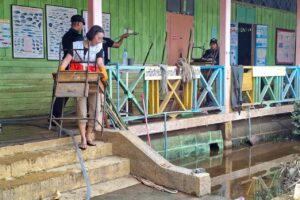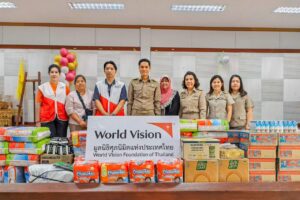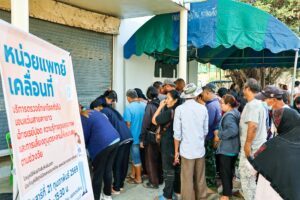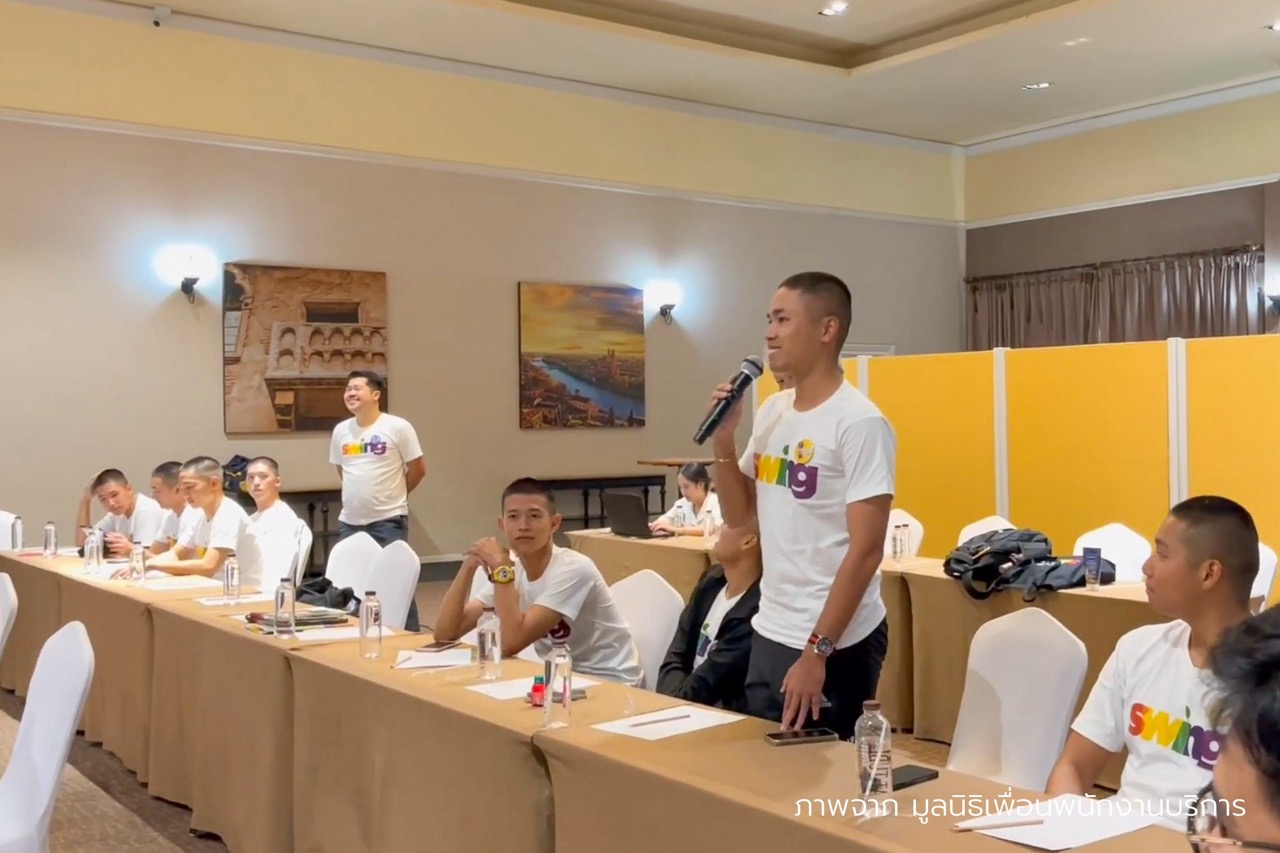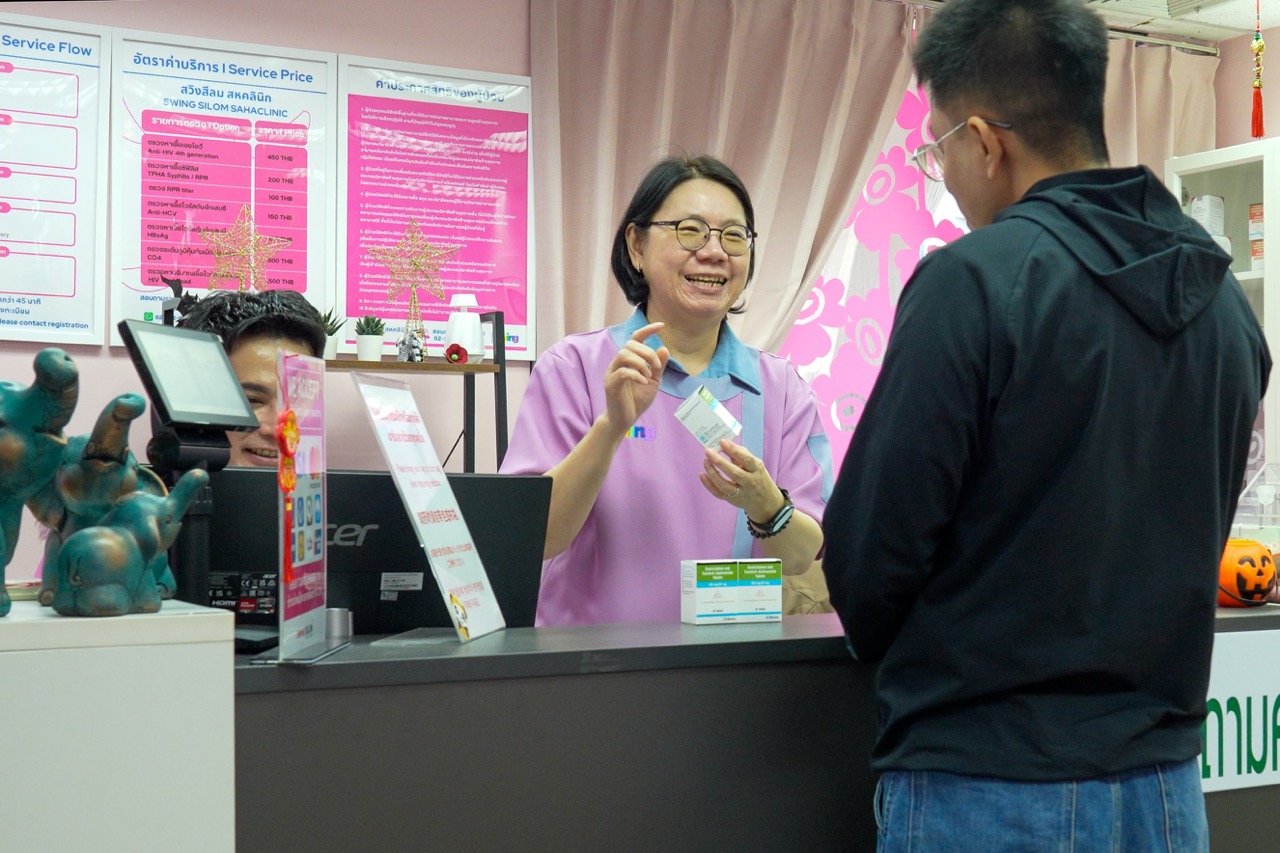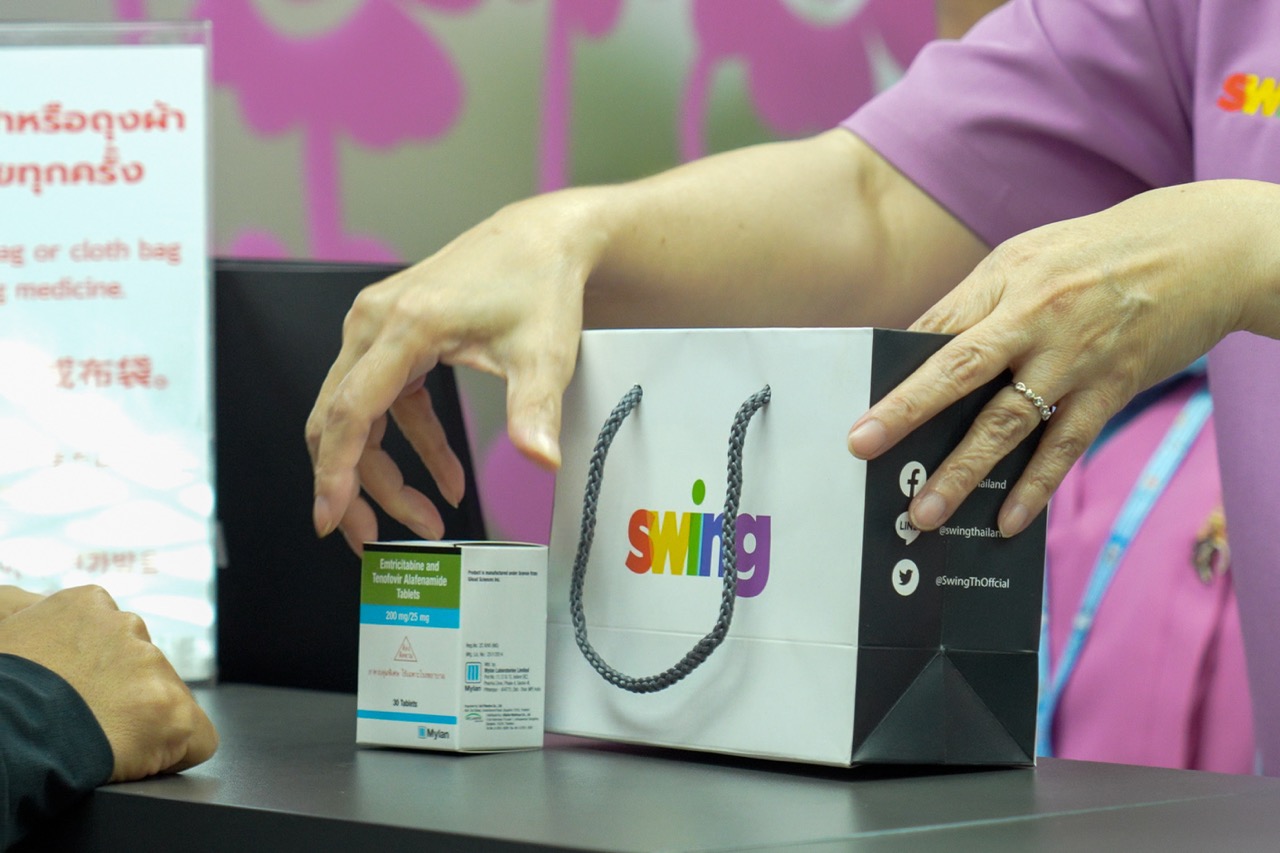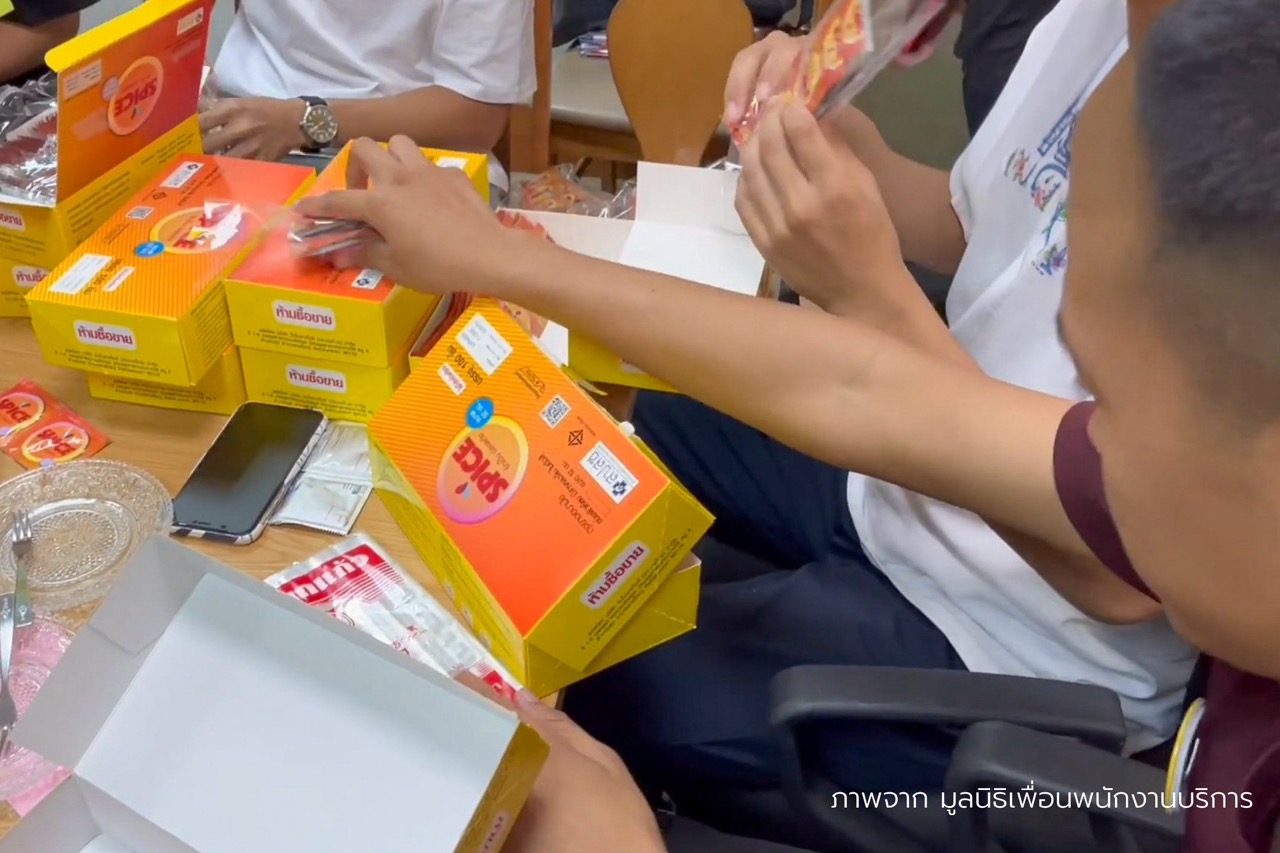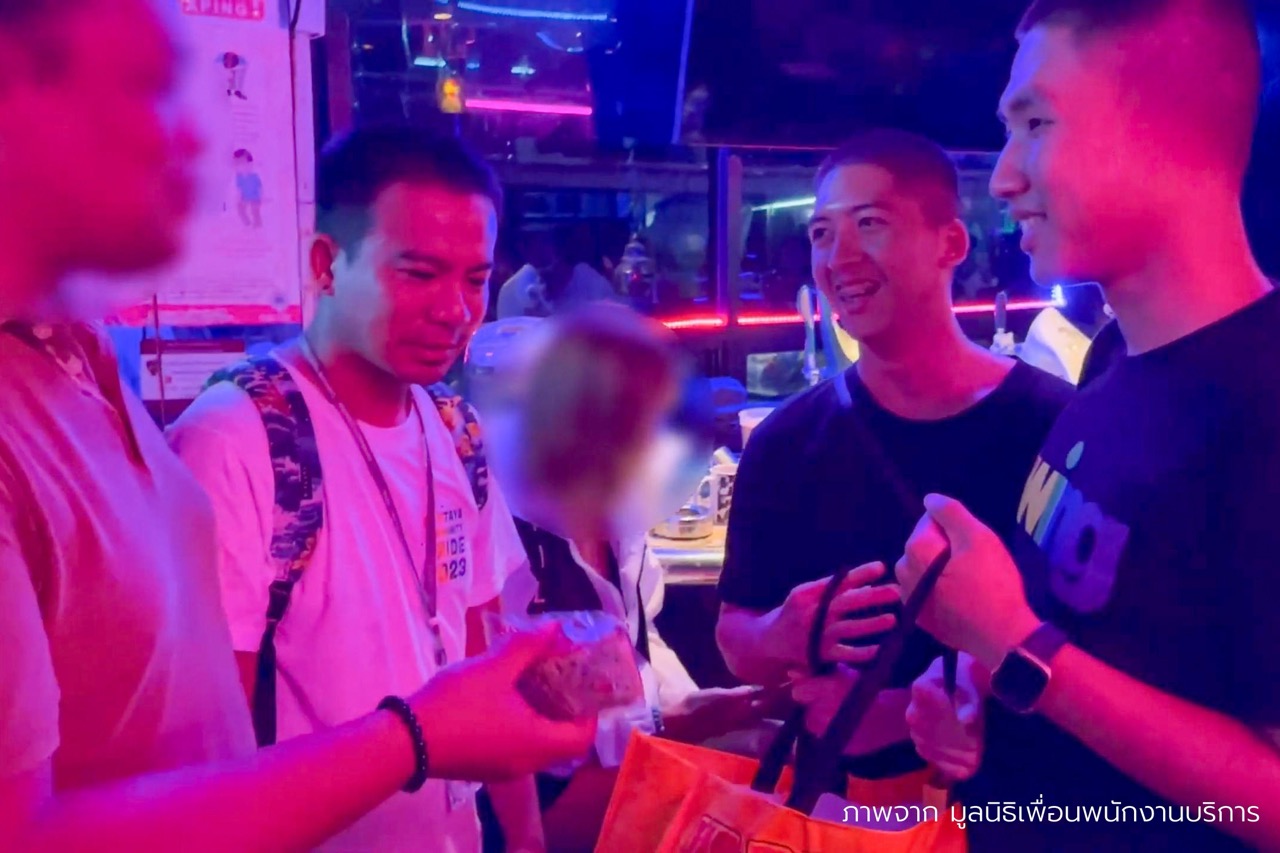
Training does not begin with theory but in real spaces — in the workplaces of service workers (sex workers) and inside police stations, where power and vulnerability come face to face without filters.
This year, on Zero Discrimination Day under the theme “We Stand Together”, World Vision Foundation of Thailand, as one of the principal recipients of the Global Fund under the “Stop TB and AIDS through RRTTPR year 2024-2026” project, is moving forward with real change — turning promises into action.
In partnership with Service Workers in Group Foundation (SWING), we are working to eliminate all forms of stigma and discrimination to reduce barriers to essential health services needed for disease control, as well as ensure access to justice for anyone whose rights have been violated.
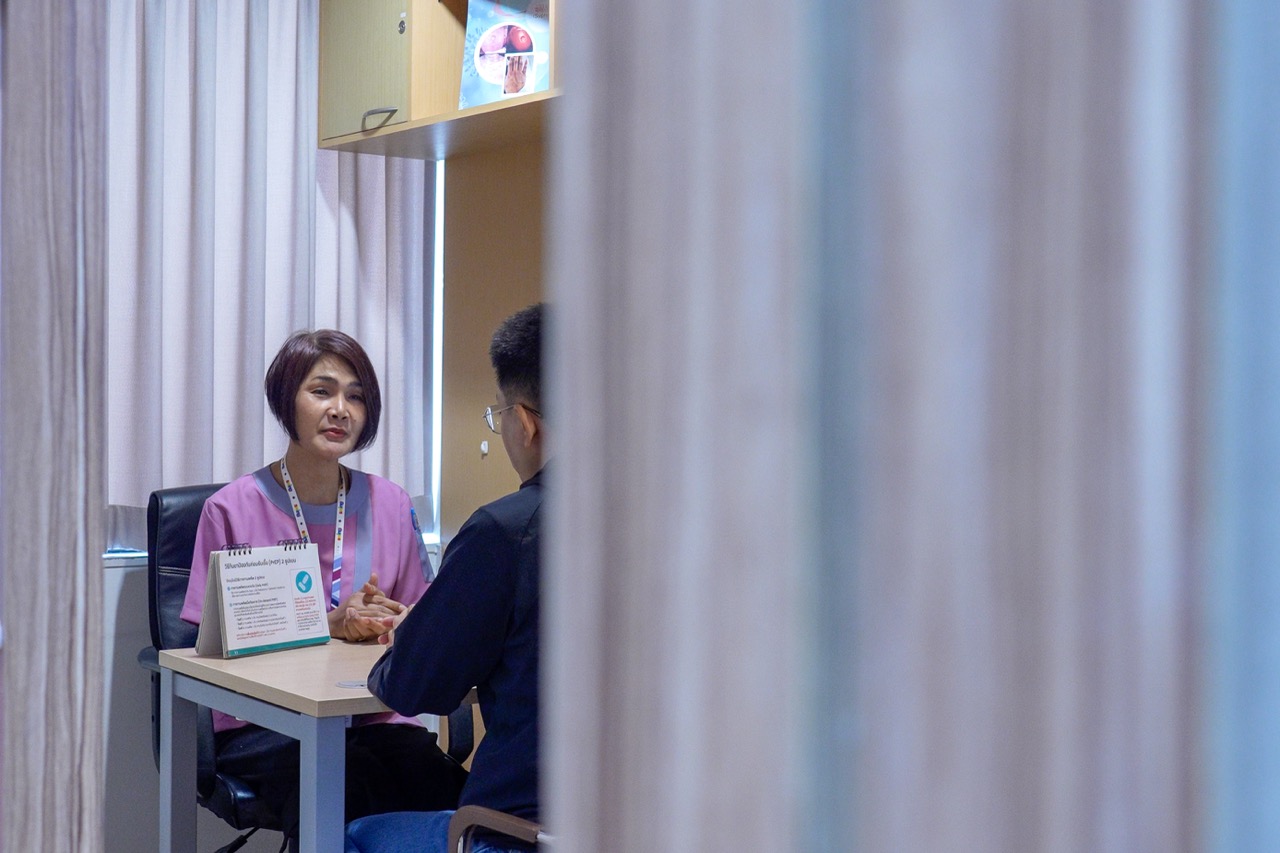
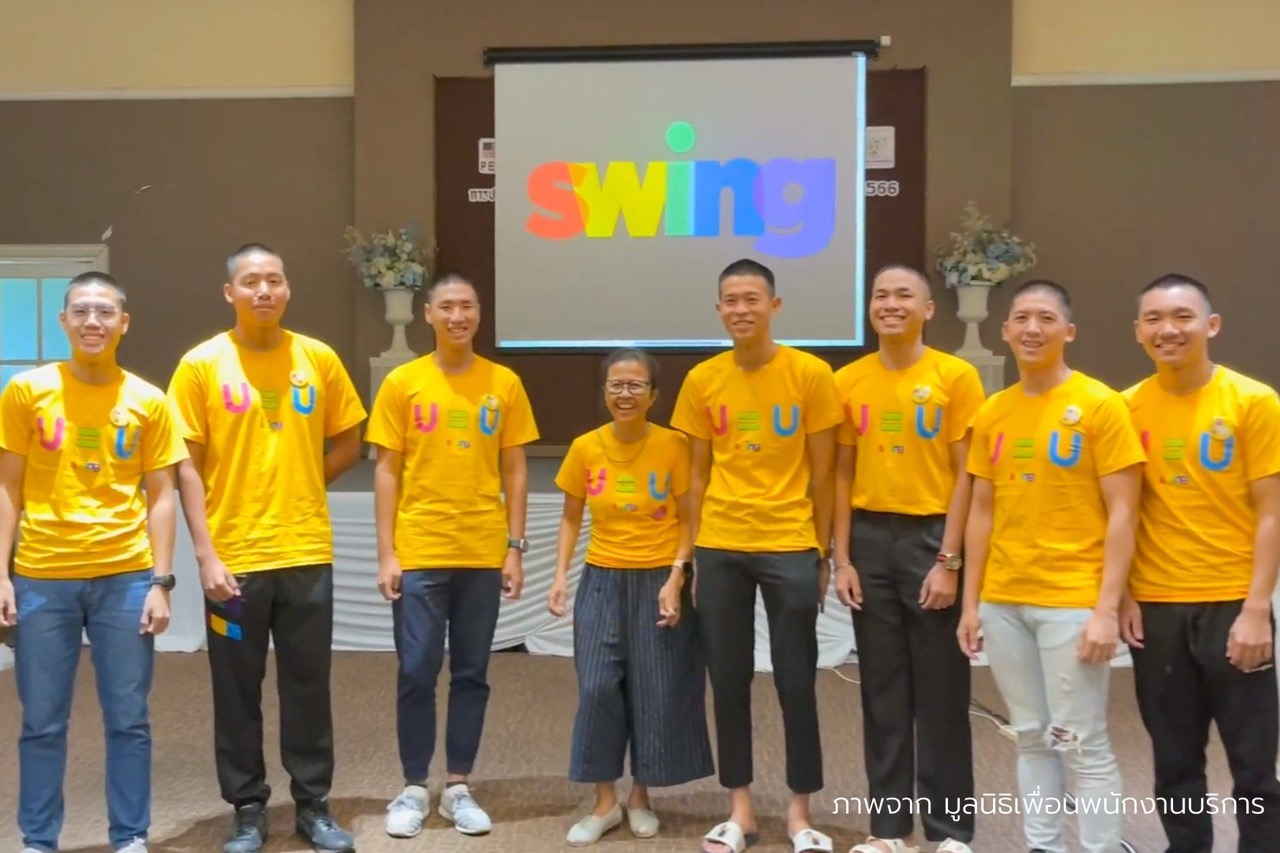
A core strength of SWING Foundation is its learning process rooted in real-life settings, enabling police cadets and officers to meet, speak with, and listen to service workers directly — not through lectures, but through lived, tangible experiences.
This is not abstract training. It is active listening. It is self-reflection. It is the courage to remove the prejudice that sits quietly within us.
“Discrimination is not a concept — it is an experience.”
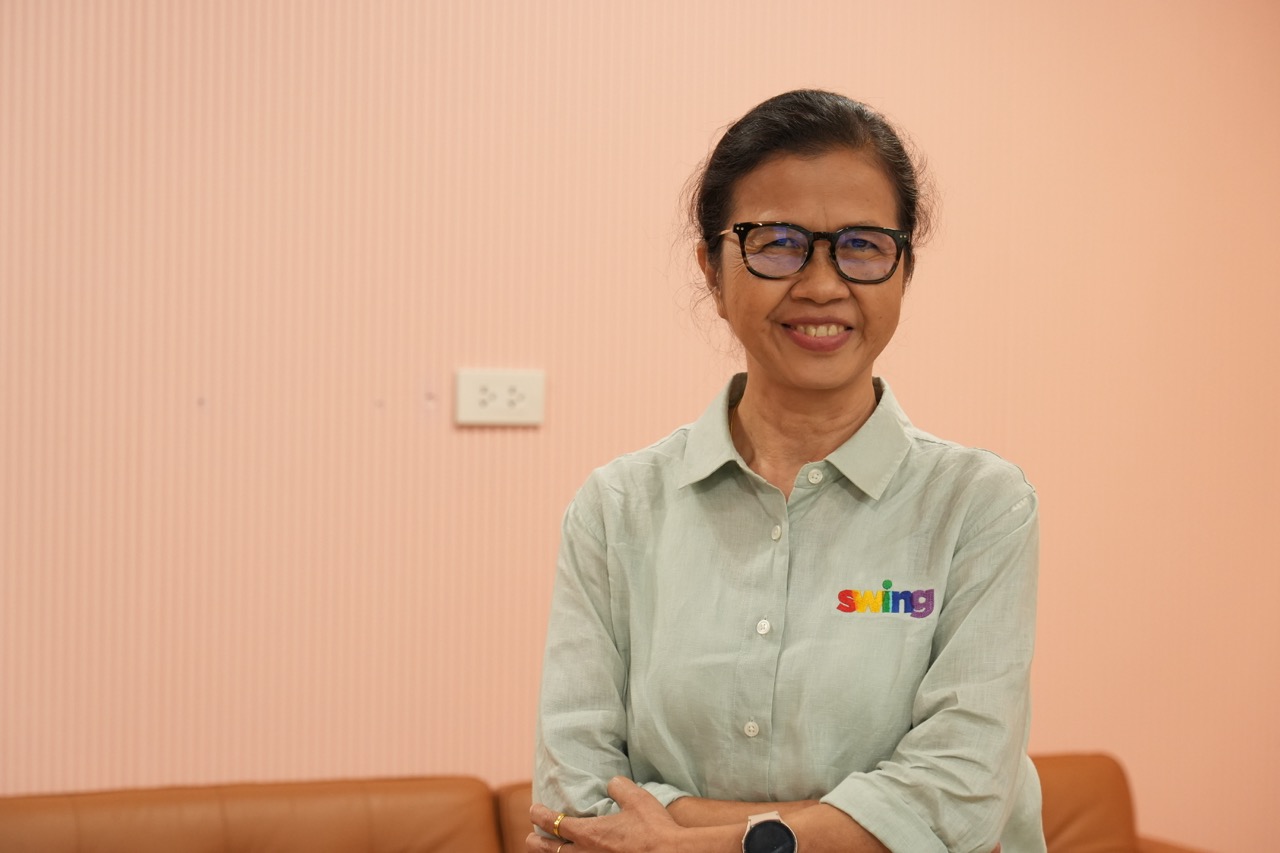
Ms Surang Janyam, Director of Service Workers in Group Foundation, has worked alongside service workers across Thailand for many years.
“Discrimination is not just something found in the textbook. It’s real,” she said. “It happens at health facilities, service points, and police stations. They feel it in the way we talk to and look at them. It’s how we quickly jump to a conclusion, even before hearing them.”
For many service workers — women, transgender people, LGBTQ+ individuals, and migrant communities — stigma becomes an invisible barrier that is nonetheless deeply felt. It prevents many of them from seeking HIV testing, asking for help, trusting the system, or accessing life-saving treatment.
Even estimating how many people are affected is difficult. As sex work is not legally recognised, many service workers choose not to disclose their identities. Public estimates often cite around 200,000 service workers nationwide, yet community-based organisations working on the ground believe the actual number is significantly higher — possibly exceeding one million when including informal and hidden sectors.
This population is diverse. Women make up around 60 per cent, men about 30 per cent, and transgender people approximately 10 per cent. Age groups vary considerably: most male service workers are aged 18–22, while many women are 30 and older, with increasing numbers in the 50–70 age group. Transgender service workers are mostly in their late 20s to mid-30s.
These realities show that stigma does not affect a single group but impacts lives across many communities — young people starting their working lives, middle-aged women supporting their families, and transgender people facing multiple-layered discrimination. The HIV response today cannot be confined to clinical care alone; it must also integrate human rights, gender diversity, and sensitivity to lived realities so that protection, access, and support are aligned with true human rights principles.
Under the “Stop TB and AIDS through RRTTPR year 2024-2026” project, supported by the Global Fund and implemented by World Vision Foundation of Thailand in partnership with SWING Foundation, both organisations work hand in hand towards Thailand’s national target — reducing stigma and discrimination to below 10 per cent. World Vision Foundation of Thailand supports the development of SWING’s complaints mechanism and works with employers to ensure target groups know, understand, and access their rights. SWING Foundation, meanwhile, leverages its community expertise and safe spaces to bring lived experiences into programme design and rights protection systems that reflect reality on the ground. Such collaboration strengthens both organisations, driving community-level and systemic-level reductions in stigma in a more tangible manner. Ending stigma and discrimination cannot be achieved by any organisation alone — it takes collective effort from all sectors.
One of SWING Foundation’s core areas of expertise is organising learning processes in real settings — both in service workers’ workplaces and police stations. Police cadets are allowed to hear life stories directly from those with lived experience, ask questions, exchange views, and see how bias — even unconscious bias — can become a structural barrier to accessing health services and justice systems that should be safe and fear-free for all.
“We are talking about the right to health access, the right to confidentiality, and the right to safety,” said Ms Surang Janyam. “We are talking about gender inequality and power dynamics that make some people more vulnerable than others.”
This training is grounded in the human rights-based approach, which emphasises participation, accountability, non-discrimination, and empowerment, alongside gender-responsive principles. Discrimination never arises from a single factor but is linked to identity, gender, economic status, and social context.
“When officers understand these dynamics, they begin to see that protection — not punishment — is what strengthens society,” she said.
The work jointly driven by World Vision Foundation of Thailand and SWING Foundation reflects the power of collaboration between two organisations with different strengths but the same goal. Combining knowledge, community insight, operational processes, shared resources, and mutual support is essential for achieving tangible, real-world reductions in stigma and discrimination.
Voice of a Police Cadet
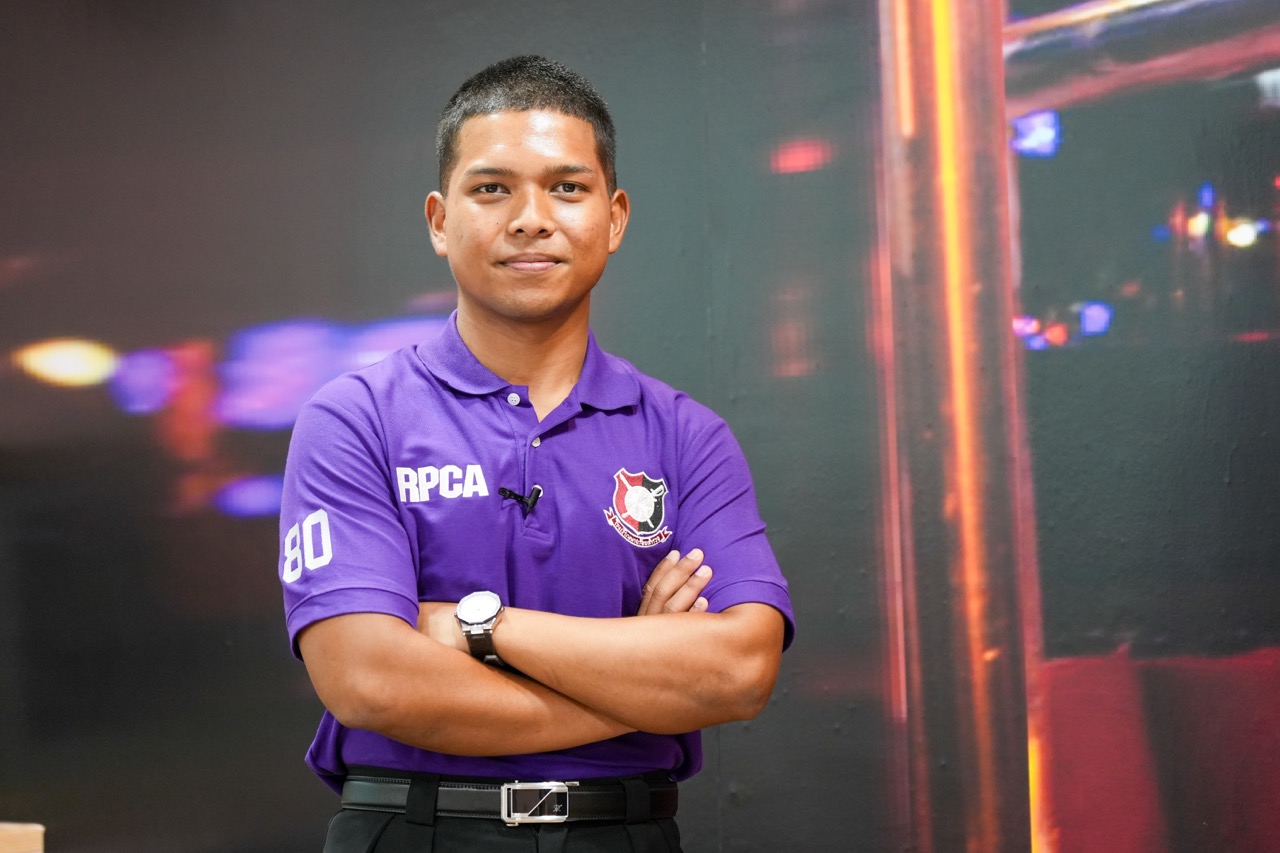
One police cadet shared how the experience shifted his perspective: “I had never stepped into the reality like this before, and I had never known what it felt like being treated with discrimination from others.”
After hearing the stories of service workers who dare not to access their fundamental rights in fear of being treated unequally, rather than prioritising their safety, he began to recognise the responsibility that comes with the uniform — the power to enforce the law, but always under the principles of fairness and justice.
“If we exercise power with prejudice, we will create distance. But if we do it with fairness, we will build trust.”
He paused before continuing, “Public safety is not just about law enforcement. It’s about making everyone feel safe enough to ask for help.”
For him, standing together means respecting everyone’s rights first, without judging them based on gender, race, religion, or occupation.
From Practice to Systemic Change
For World Vision Foundation of Thailand, this partnership is not a one-off activity but part of a holistic system strengthening, including rights protection, health services, and community coordination.
As a principal recipient of the Global Fund, World Vision Foundation of Thailand’s HIV response extends beyond treatment but includes dismantling structural barriers to service access and eliminating all forms of stigma and discrimination.
When everyone feels respected, they will seek services sooner. When officers act without prejudice, trust will increase. And when systems are accountable, transparent, and fair, prevention will be sustainable.
Ending AIDS must begin with ending stigma and discrimination — especially in our small, everyday interactions.
We Stand Together
The message of Zero Discrimination Day is not merely words but action. It happens in small talks at the workplace, in police interrogation rooms, and in the courage to confront our bias.
Thanks to continued support from the Global Fund, World Vision Foundation of Thailand and Service Workers in Group Foundation are advancing our efforts to end AIDS in Thailand, recognising the significance of human dignity, equality, and collaboration.
When institutions and communities truly stand together, discrimination will gradually begin to lose its hold.
And that is when respect for fundamental human dignity truly becomes a practice.